

How Workplace Yoga Can Support Employee Wellbeing, Productivity, and Engagement
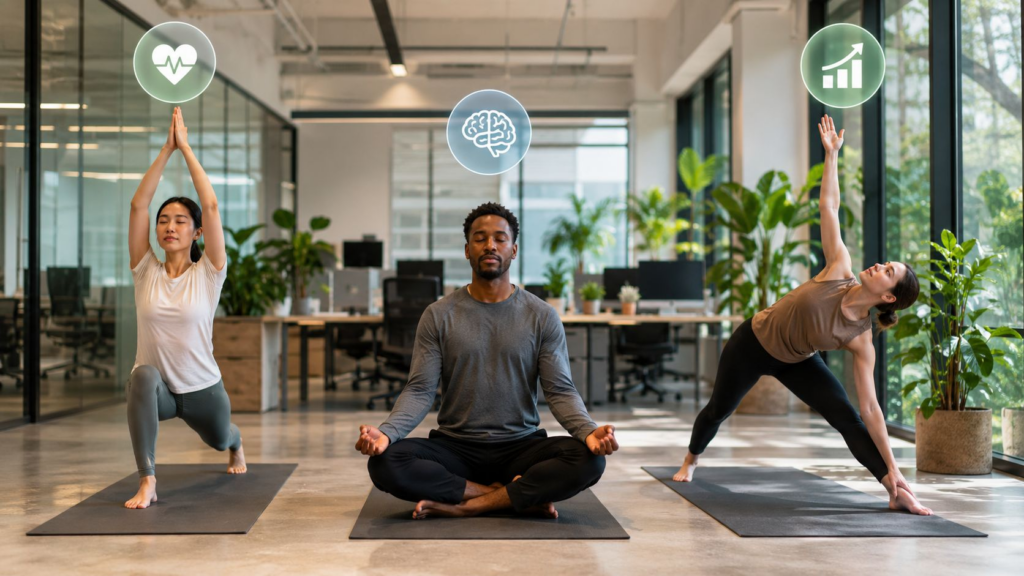
Employee wellbeing programs continue to evolve as organizations look for practical ways to reduce stress, improve engagement, and support healthier workplaces. Yoga has become an increasingly popular workplace wellness activity because it combines movement, breathing, flexibility, and mindfulness into one accessible practice.
When incorporated into a broader wellness strategy, workplace yoga can help employees manage stress, improve mobility, increase energy, and support overall wellbeing.
Why Employers Are Offering Workplace Yoga
Many employees spend long hours sitting at desks, attending meetings, or managing demanding workloads. Over time, these daily routines can contribute to:
- Muscle tension
- Stress
- Mental fatigue
- Reduced focus
- Poor posture
- Sleep difficulties
Yoga offers employees an opportunity to pause, move, and recharge during the workday.
Rather than serving as a standalone perk, yoga can complement existing employee wellness initiatives.
Stress Management and Relaxation
One of the most recognized benefits of yoga is its ability to encourage relaxation.
Workplace yoga sessions often include:
- Gentle stretching
- Controlled breathing
- Mindfulness exercises
- Relaxation techniques
These practices can help employees feel calmer and better prepared to handle workplace demands.
Organizations may choose to schedule sessions before busy periods, after major projects, or during particularly stressful times of the year.
Supporting Physical Health
Yoga promotes functional movement and flexibility that can benefit employees with sedentary jobs.
Potential benefits include:
- Improved flexibility
- Better posture
- Increased mobility
- Greater core strength
- Reduced muscle stiffness
- Improved body awareness
Employees who spend much of the day sitting may especially appreciate opportunities to move throughout the workweek.

Encouraging Better Focus
Modern work environments require employees to constantly shift attention between meetings, emails, projects, and deadlines.
Yoga encourages employees to slow down, focus on breathing, and become more present.
Many organizations find yoga particularly useful:
- Before strategic meetings
- During training sessions
- Following high-pressure projects
- As part of leadership development
- During employee wellness events
Even short sessions can help employees transition more effectively between demanding tasks.
Supporting Healthy Workplace Habits
Yoga also reinforces several healthy lifestyle behaviors.
Employees who participate regularly often become more aware of:
- Physical activity
- Recovery
- Sleep habits
- Stress management
- Overall wellbeing
When paired with nutrition education, wellness coaching, and ergonomic support, yoga becomes one part of a comprehensive employee wellness strategy.
Flexible Program Options
Organizations can choose delivery models that best fit their workforce.
Options include:
Onsite Classes
Ideal for office-based teams and organizations with centralized locations.
Virtual Sessions
Suitable for remote and hybrid employees.
Recorded Classes
Allow employees to participate whenever their schedules permit.
Offering multiple participation options helps improve accessibility across diverse workforces.

Building a Successful Yoga Program
Successful workplace yoga initiatives typically include:
- Qualified instructors
- Beginner-friendly classes
- Flexible scheduling
- Safe modifications for different ability levels
- Consistent communication
- Easy registration
Programs should encourage participation without creating pressure or competition.
The goal is to make movement approachable for employees at every experience level.
Measuring Program Success
Employers can evaluate yoga programs using several indicators, including:
- Participation rates
- Repeat attendance
- Employee satisfaction
- Wellness survey feedback
- Self-reported stress levels
- Employee engagement
- Overall wellbeing trends
Reviewing feedback regularly allows organizations to adjust scheduling, formats, and class offerings over time.
Integrating Yoga into a Broader Wellness Strategy
Yoga works best when combined with other employee wellbeing initiatives.
Organizations may integrate yoga alongside:
- Wellness coaching
- Nutrition education
- Ergonomic assessments
- Stress management resources
- Mental wellbeing initiatives
- Leadership wellbeing programs
This comprehensive approach provides employees with multiple ways to support their health throughout the workday.

Final Thoughts
Yoga offers organizations an accessible and flexible way to support employee wellbeing. By encouraging movement, relaxation, and healthy daily habits, workplace yoga can contribute to a more engaged, energized, and resilient workforce.
Excel Wellbeing Solutions helps organizations build customized workplace wellness programs that may include onsite and virtual yoga classes, ergonomic assessments, wellness coaching, nutrition education, stress management resources, mental wellbeing programming, and employee wellbeing initiatives designed to support healthier, more productive workplaces.