
How Sit-Stand Workstations Support Employee Wellbeing, Productivity, and Workplace Performance
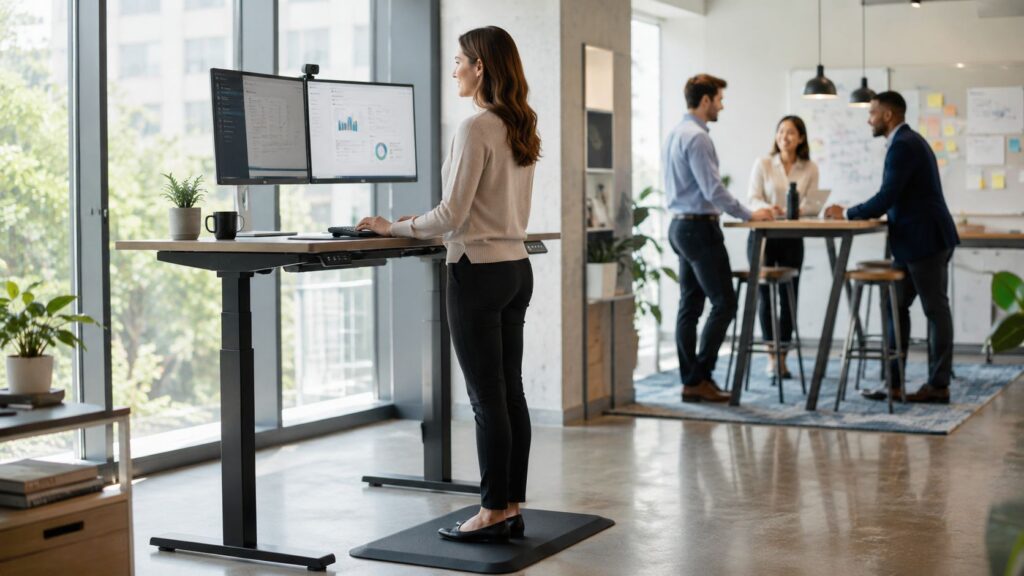
Standing desks have become a common feature in modern offices, but their value extends far beyond office design trends. When implemented as part of a thoughtful workplace wellbeing strategy, sit-stand workstations can help employees stay comfortable, maintain focus, and support productivity throughout the workday.
Rather than replacing traditional desks, standing desks encourage movement and posture changes that help reduce the effects of prolonged sitting. For organizations focused on employee engagement and workplace performance, they can be a practical addition to a healthier work environment.
Why Standing Desks Matter
Many office employees spend most of their day sitting at a computer. Over time, remaining in one position can contribute to discomfort, reduced energy, and decreased concentration.
Standing desks encourage employees to alternate between sitting and standing, promoting movement throughout the day without interrupting work. This simple change supports a more dynamic work environment while allowing employees to work in the position that feels most comfortable.
When combined with other workplace wellbeing initiatives, standing desks help create an environment designed to support employees throughout the workday.
Benefits for Employees and Employers
Organizations implementing standing desks often report improvements in both employee experience and workplace performance.
Potential benefits include:
- Increased employee comfort
- Reduced neck, shoulder, and back discomfort associated with prolonged sitting
- Improved focus during extended computer work
- Greater workplace flexibility
- Enhanced employee satisfaction
While standing desks are not a complete solution on their own, they support many of the goals organizations already pursue through workplace wellbeing programs.

Best Practices for Standing Desk Use
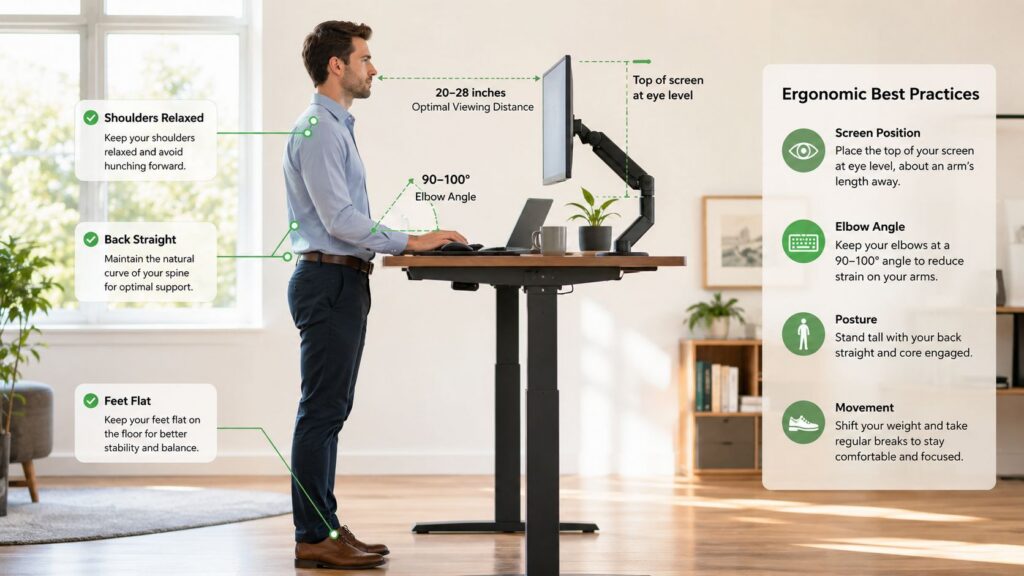
The goal is not to stand all day. Instead, employees should alternate positions throughout the workday.
Simple recommendations include:
- Alternate between sitting and standing every 20 to 30 minutes.
- Adjust monitor height so the top of the screen is at eye level.
- Keep keyboards and mice positioned to support relaxed shoulders and neutral wrists.
- Wear supportive footwear when standing for extended periods.
- Incorporate short walking or stretching breaks throughout the day.
These small habits help employees gain the greatest benefit while maintaining comfort.
Building a Successful Standing Desk Program
Introducing standing desks is most successful when organizations view them as part of a larger workplace wellbeing strategy rather than simply purchasing new equipment.
A successful rollout typically includes:
Employee Education
Provide guidance on proper workstation setup and encourage employees to alternate positions throughout the day.
Pilot Programs
Begin with a smaller group to evaluate employee feedback before expanding throughout the organization.
Manager Support
Encourage leaders to model healthy workplace habits by incorporating movement into their own workday.
Ongoing Evaluation
Gather employee feedback and monitor utilization to ensure the program continues meeting workplace needs.

Measuring Program Success
Standing desk initiatives can be evaluated using practical workplace metrics such as:
- Employee participation
- Employee satisfaction surveys
- Workplace comfort feedback
- Productivity observations
- Overall engagement with workplace wellbeing initiatives
Reviewing these measures helps organizations understand employee adoption while identifying opportunities for continuous improvement.
Creating a Culture of Movement
Standing desks work best when they become part of everyday workplace habits. Encouraging employees to alternate positions, take brief movement breaks, and create comfortable workstations helps build a culture that supports both employee wellbeing and workplace performance.
Combined with ergonomic assessments, movement initiatives, and other wellbeing programs, standing desks contribute to an environment where employees can perform their best throughout the day.
Final Thoughts
Standing desks are a practical investment in the employee experience. By encouraging movement and reducing the effects of prolonged sitting, organizations can create more comfortable workspaces that support focus, engagement, and productivity.
As part of a broader workplace wellbeing strategy, standing desks help reinforce a culture that values employee comfort, performance, and long-term success.
Excel Wellbeing Solutions partners with organizations to develop workplace wellbeing strategies that support healthier work environments, greater employee engagement, and improved organizational performance.