
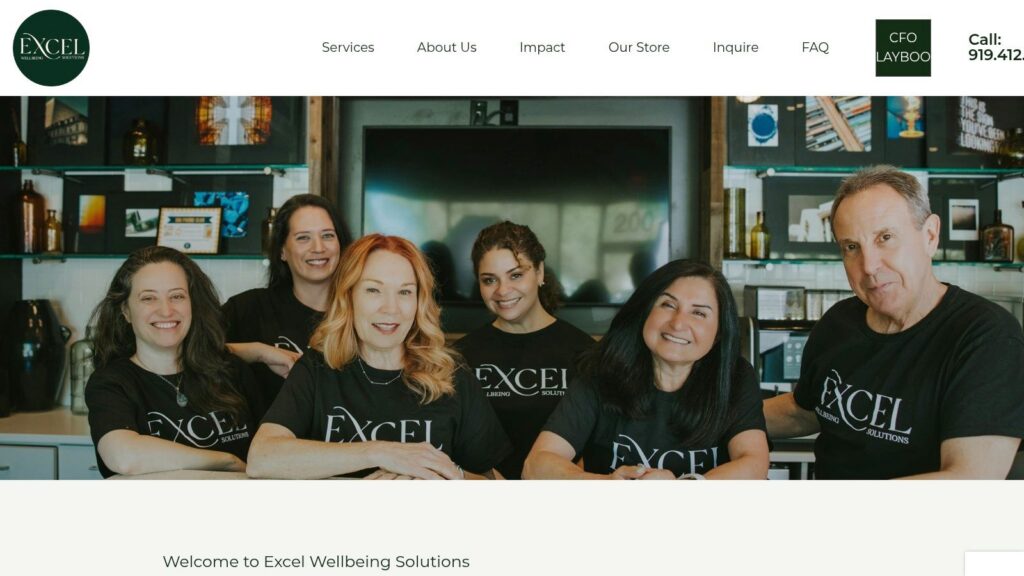
[FEATURED IMAGE: Diverse workforce participating in workplace wellbeing activities]
You've seen the pattern. HR launches a meditation app, adds a lunchtime class, promotes it hard for two weeks, and then watches participation flatten.
The issue usually isn't that employees don't care about wellbeing. It's that the offer was designed as a broad perk instead of a response to different realities across the workforce.
[IMAGE: Diverse workforce including office employees, frontline workers, remote workers, and managers]
A call center supervisor, a night-shift technician, a new parent, and a regional sales leader don't need the same support, delivery model, or communication. When employers treat them as one audience, even well-funded programs underperform.
Personalized wellness solutions work when leaders stop asking, “What can we offer everyone?” and start asking, “What friction is each employee group facing, and what support fits that context?”
A generic program often looks efficient on paper. One platform. One campaign. One calendar of events.
In practice, it tends to solve for administrative simplicity, not employee relevance.
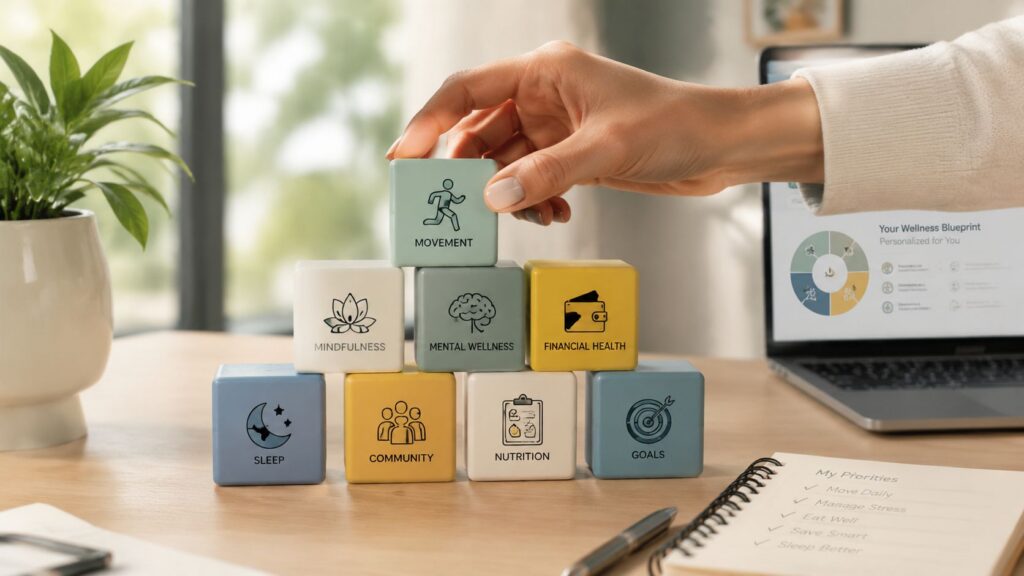
Personalization isn't a longer menu of perks. It's a design discipline.
It means an employer identifies distinct workforce segments, understands what gets in the way for each group, and then adjusts delivery, messaging, and support accordingly.
Generic programs ask employees to adapt to the offering. Personalized wellness solutions adapt the offering to employees.
That distinction changes business outcomes. HR leaders who want stronger retention and productivity usually don't need a louder campaign. They need a system that employees recognize as relevant.
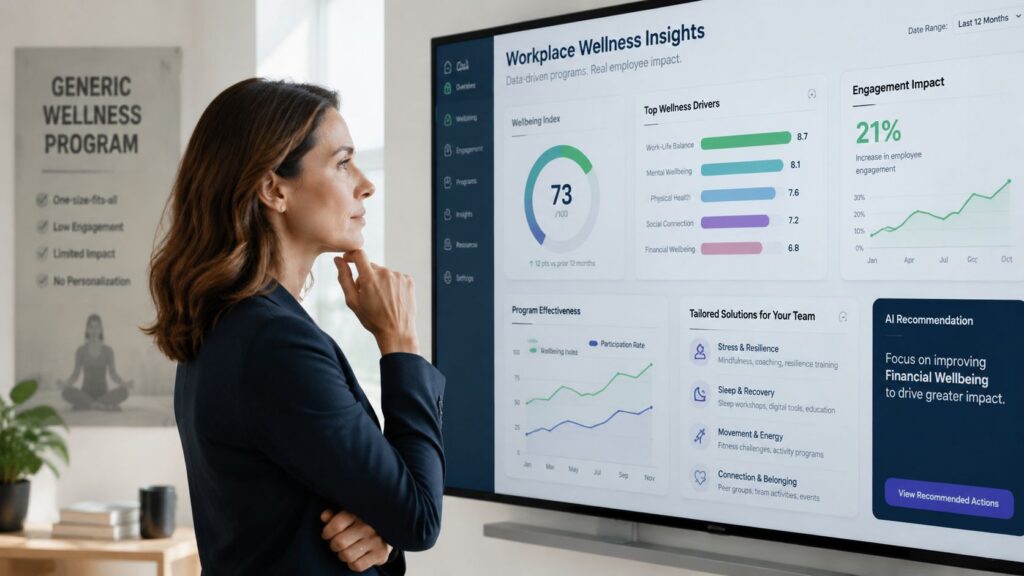
Most personalization efforts fail before launch. The problem usually isn't execution. The problem is diagnosis.
HR teams often rely on a single annual survey and then move straight into solution design. That approach misses the reasons people don't engage.
[IMAGE: Employee survey results and workplace analytics dashboard]
A practical discovery stack usually includes:
In this context, many HR teams uncover a hard truth. The issue isn't that they lack offerings. It's that employees can't see themselves in those offerings.
Employees are not one-size-fits-all.
Segmentation should consider:
If your only segmentation is office versus remote, you're still designing too broadly.
Once the workforce is segmented, the design question changes. You're no longer building a single program. You're building a system with a shared foundation and different paths through it.
Movement and physical comfort, mental and emotional wellbeing, nutrition support, and social connection all play a role in long-term employee engagement.
The most effective programs match support to employee needs rather than broadcasting the same solution to everyone.
Many teams overbuild.
A better path is to:
Start with the smallest version that can prove fit for a defined employee segment.
Execution is where promising strategies often become overcomplicated.
Leaders should focus on phased implementation rather than enterprise-wide launches that make measurement difficult.
Before launch, evaluate:
If you're evaluating service models, Excel Wellbeing Solutions offers workplace wellbeing services including onsite fitness classes, massage therapies, nutritional guidance, and mental wellbeing support that can be tailored to the unique needs of your workforce.
If HR reports success with sign-ups alone, executive support won't last.
Measurement should include both leading indicators and long-term business outcomes.
The goal is not simply more engagement. The goal is measurable workforce impact.
Common questions include:
Successful programs address these concerns proactively through clear communication, thoughtful program design, and transparent measurement.
Personalized wellness solutions are most effective when they align employee needs with organizational goals.
By taking a segmented, data-informed approach, HR leaders can improve engagement, support workforce wellbeing, and create measurable business impact.
Ready to build a more personalized wellbeing strategy for your workforce?
Contact Excel Wellbeing Solutions to discuss programs tailored to your employees, culture, and business objectives.