
A Practical Guide to Building a Workplace Wellbeing Program That Employees Will Use
Employee wellbeing is about more than offering occasional wellness activities. Successful organizations build workplace wellbeing programs that support employees through education, engagement, and practical resources that fit into everyday work.
A well-designed holistic wellness program helps employees feel supported while reinforcing a positive workplace culture.

What Is a Holistic Wellness Program?
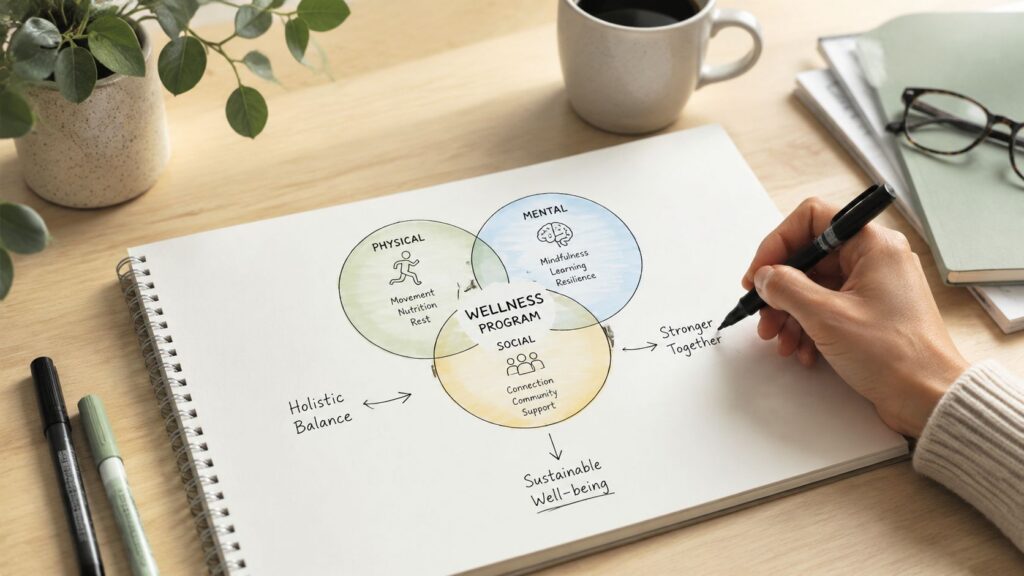
A holistic wellness program recognizes that employee wellbeing is influenced by multiple factors, including physical health, mental wellbeing, financial wellness, and social connection.
Rather than focusing on one area, holistic programs provide employees with access to a variety of resources that encourage healthier habits and greater workplace engagement.
Key Elements of a Successful Program
The most effective workplace wellbeing programs are simple, accessible, and aligned with employee needs.
Common components include:
- Physical wellbeing activities
- Mental wellbeing education
- Financial wellness resources
- Team-building opportunities
- Healthy workplace initiatives
Organizations do not need dozens of programs. They need a coordinated approach that employees understand and use.

Start with Employee Needs
Every workforce is different. Before launching a new wellbeing initiative, organizations should gather employee feedback through surveys, manager conversations, or engagement assessments.
This information helps leaders understand which resources employees value most and where additional support may be needed.
Make Participation Easy
Even the best wellness programs will struggle if employees find them difficult to access.
Organizations can improve participation by:
- Offering onsite and virtual options
- Communicating regularly
- Scheduling activities during convenient times
- Providing clear information about available resources
Simple, consistent communication often has a greater impact than offering more programs.
Encourage Leadership Support
Managers and leaders play an important role in creating a culture that values wellbeing.
When leadership actively supports workplace wellbeing initiatives, employees are more likely to participate and view the program as part of the organization's culture rather than a temporary campaign.

Measure What Matters
Organizations should regularly evaluate their wellbeing programs to identify opportunities for improvement.
Helpful metrics may include:
- Employee participation
- Employee feedback
- Engagement survey results
- Retention trends
- Overall program utilization
Reviewing these measures helps organizations continue building programs that meet employee needs.
Keep Improving
Workplace wellbeing programs should evolve over time. Employee needs, workplace expectations, and organizational priorities change, making regular evaluation an important part of long-term success.
Gathering feedback and making small improvements helps keep programs relevant and engaging.
Final Thoughts
A successful holistic wellness program supports employees through practical resources, meaningful engagement, and a workplace culture that values wellbeing. By keeping programs simple, accessible, and responsive to employee needs, organizations can create initiatives that benefit both employees and the workplace.
Excel Wellbeing Solutions partners with organizations to deliver onsite and virtual workplace wellbeing programs that support employee engagement, education, and long-term workforce success.