
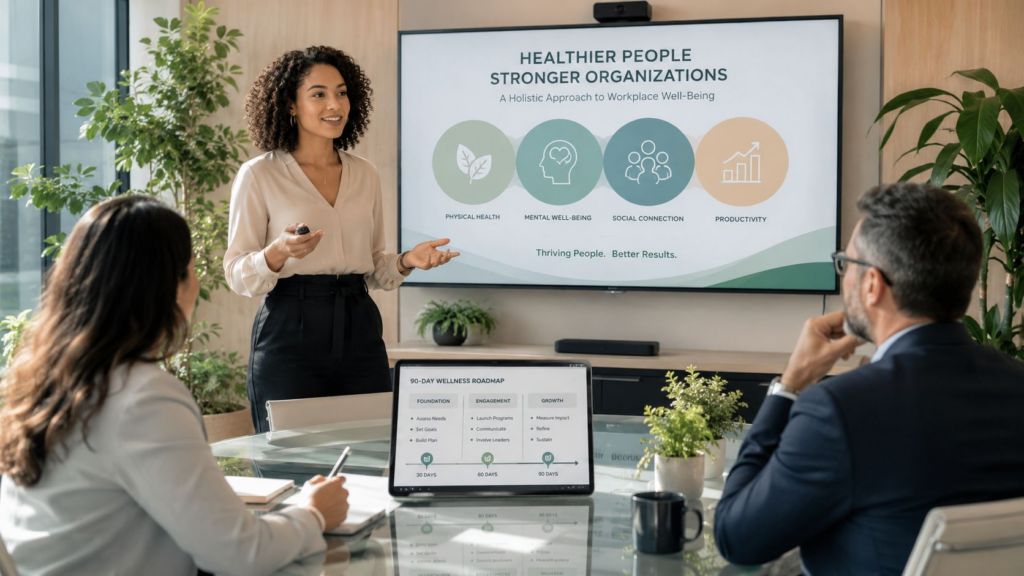
How to Choose the Right Partner for Employee Wellbeing, Engagement, and ROI
Many organizations already offer employee wellbeing resources but still struggle with low participation, unclear strategy, or inconsistent results. A workplace wellness consultant can help employers identify what employees need, organize existing resources, and build a more practical wellbeing strategy.
The right consultant does more than recommend activities. They help connect employee wellbeing with workplace culture, leadership, engagement, and business goals.
What Does a Workplace Wellness Consultant Do?
A workplace wellness consultant helps organizations design, implement, and evaluate employee wellbeing programs.
Common responsibilities include:
- Assessing workforce needs
- Reviewing existing wellbeing resources
- Recommending program options
- Supporting implementation
- Training managers and leaders
- Measuring participation and employee feedback
The goal is to create a program that fits the organization rather than relying on a one-size-fits-all approach.
When Should an Organization Hire a Consultant?
A consultant may be helpful when:
- Employee participation is low
- Existing programs feel disconnected
- Managers report increasing workplace stress
- The organization needs a clearer wellbeing strategy
- HR needs support with implementation or measurement
- Leadership wants to connect wellbeing with engagement and retention
Consultants can also help organizations avoid investing in programs employees are unlikely to use.
Start With a Workplace Assessment
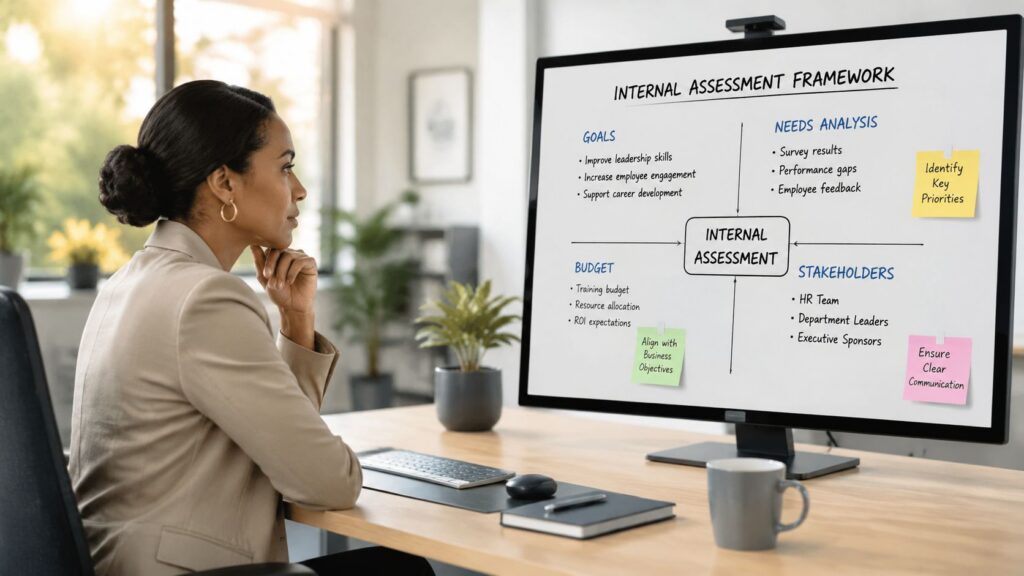
Before choosing services, organizations should understand their current challenges.
A workplace assessment may include:
- Employee surveys
- Focus groups
- Manager feedback
- Participation trends
- Workplace culture reviews
- Existing program evaluations
This information helps identify which resources are most relevant and where employees may face barriers to participation.
What to Look for in a Workplace Wellness Consultant
Strategic Experience
The consultant should understand how employee wellbeing connects with workplace culture, leadership, and organizational goals.
Customized Recommendations
Look for a partner that adapts programs to different employee populations, schedules, and work environments.
Flexible Delivery Options
Programs may need to include a combination of:
- Onsite services
- Virtual sessions
- Educational workshops
- Manager training
- Employee wellbeing resources
Clear Measurement
A strong consultant should explain how participation, employee feedback, and program effectiveness will be evaluated.
Implementation Support
Some consultants provide recommendations but leave execution entirely to internal teams. Clarify how much support will be provided during rollout.
Questions to Ask Before Hiring
Consider asking:
- How do you assess employee needs?
- How do you customize programs?
- What services do you provide?
- How do you support onsite, remote, and hybrid employees?
- How will success be measured?
- What support is included after launch?
- How often will results be reviewed?
Clear answers help organizations compare providers more effectively.
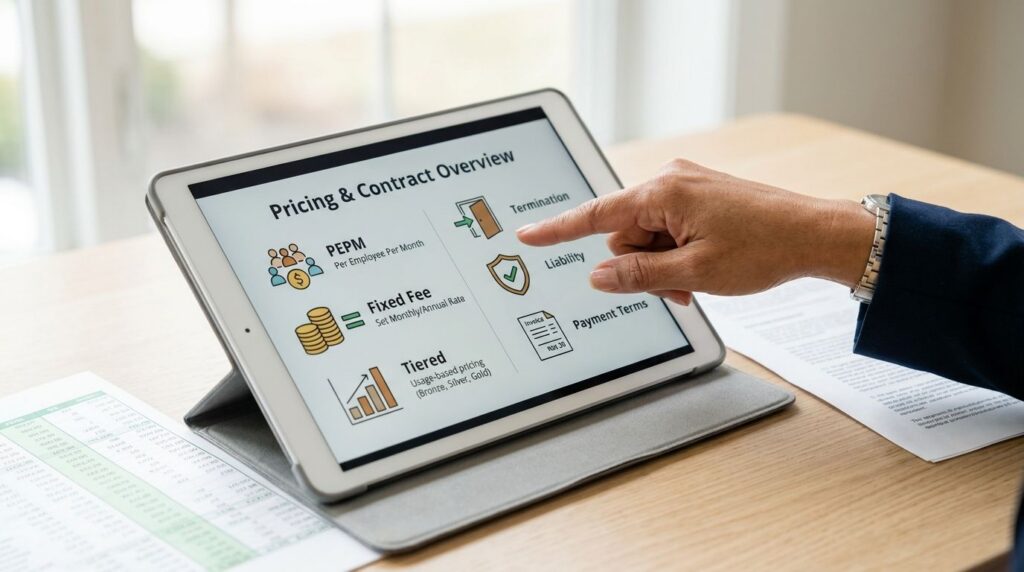
Review Pricing and Scope Carefully
Workplace wellness consultants may offer:
- Project-based services
- Ongoing consulting retainers
- Per-employee pricing
- Program-specific packages
The contract should clearly define:
- Services included
- Responsibilities
- Timeline
- Reporting expectations
- Program costs
- Communication and follow-up support
Organizations should focus on overall value, not price alone.
Plan for a Successful Launch
A strong launch should include:
- Leadership support
- Manager communication
- Clear employee instructions
- Multiple communication channels
- Easy access to services
- Opportunities for employee feedback
Programs are more likely to succeed when employees understand what is available and how it supports their workplace experience.

Measure and Improve
Organizations should regularly review:
- Employee participation
- Program utilization
- Employee feedback
- Manager involvement
- Engagement trends
- Workplace satisfaction
The goal is continuous improvement rather than a one-time launch.
Final Thoughts
Finding the right workplace wellness consultant can help organizations create a more organized, practical, and effective employee wellbeing strategy.
By choosing a partner with strong assessment, implementation, and measurement capabilities, employers can build programs that support employee engagement, workplace culture, and long-term organizational success.
Excel Wellbeing Solutions partners with organizations to deliver onsite and virtual workplace wellbeing programs, seminars, stress management workshops, fitness services, nutritional guidance, massage therapies, and employee education.