
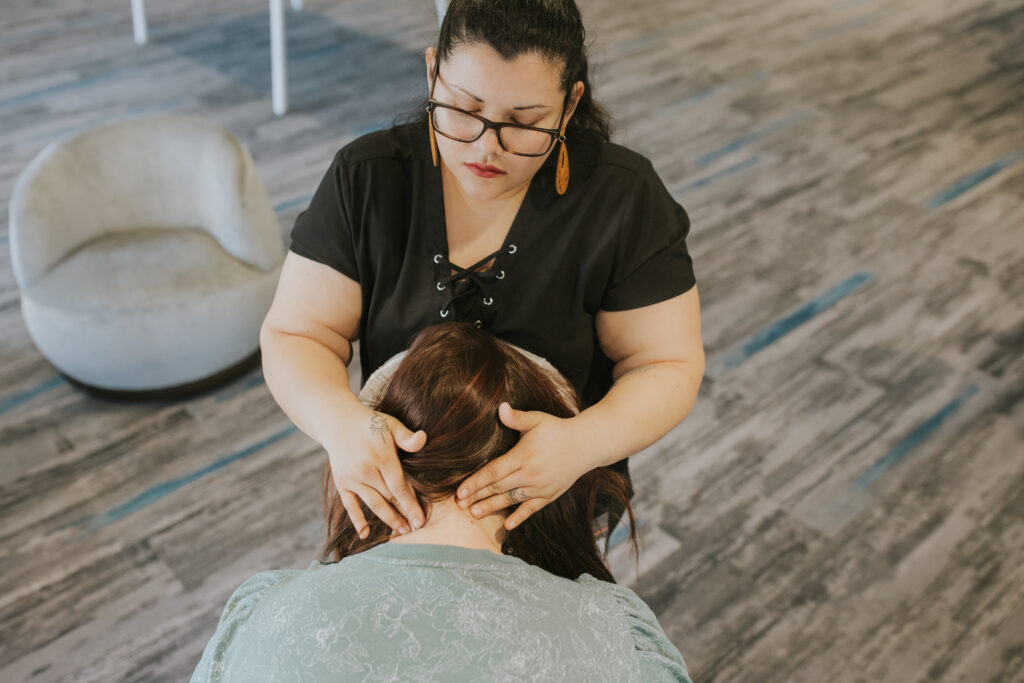
How On-Site Chair Massage Supports Employee Engagement, Comfort, and Workplace Performance
Long hours at a desk, back-to-back meetings, and constant screen time can leave employees feeling physically tense and mentally drained. While organizations continue investing in workplace wellbeing initiatives, one simple benefit often delivers immediate value without disrupting the workday: on-site chair massage.
Unlike benefits that require employees to leave the office or schedule appointments after work, chair massage fits naturally into the workday. Short sessions provide employees with an opportunity to reset before returning to their responsibilities feeling refreshed and refocused.
Why Chair Massage Is More Than a Workplace Perk
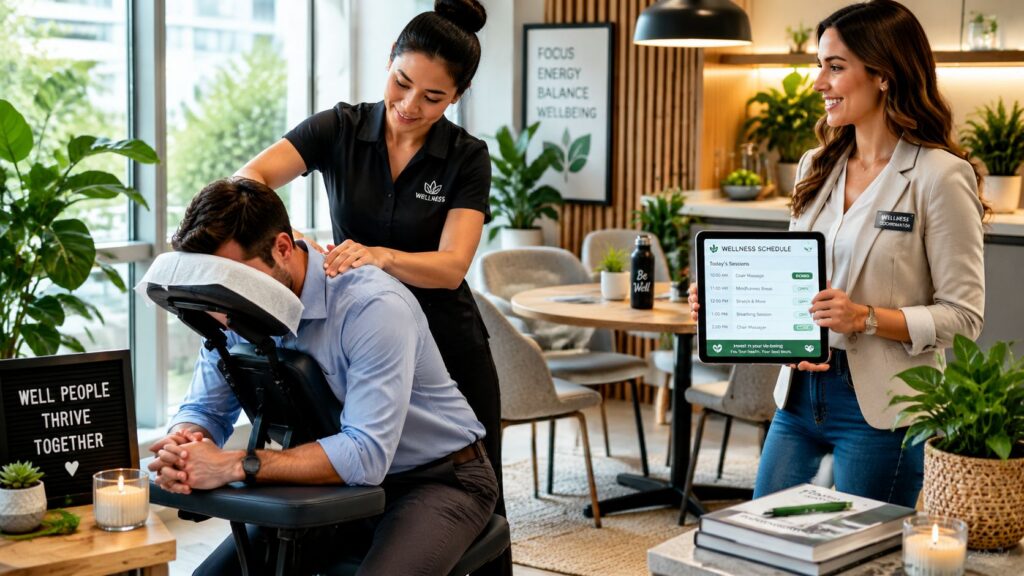
Chair massage is often viewed as an employee appreciation activity, but it can also support broader workplace wellbeing goals. When incorporated into a comprehensive wellbeing strategy, it complements ergonomic improvements, employee engagement efforts, and initiatives designed to create a more positive work environment.
Employees experiencing prolonged desk work commonly report tension in the neck, shoulders, and upper back. Providing convenient opportunities to relieve that discomfort can improve the overall employee experience while encouraging employees to take short, restorative breaks throughout the day.
Benefits for Employees and Employers
A well-organized chair massage program can provide benefits for both employees and the organization.
Potential advantages include:
- Increased employee comfort during the workday
- Reduced muscle tension from prolonged sitting
- Opportunities for mental reset between meetings or projects
- Improved employee engagement with workplace wellbeing initiatives
- Convenient participation without leaving the workplace
Because sessions are brief and performed while employees remain fully clothed, chair massage can easily fit into most office environments.
Building a Successful Workplace Program
The most successful programs are designed with employee convenience in mind.
Consider these best practices:
Schedule Around the Workday
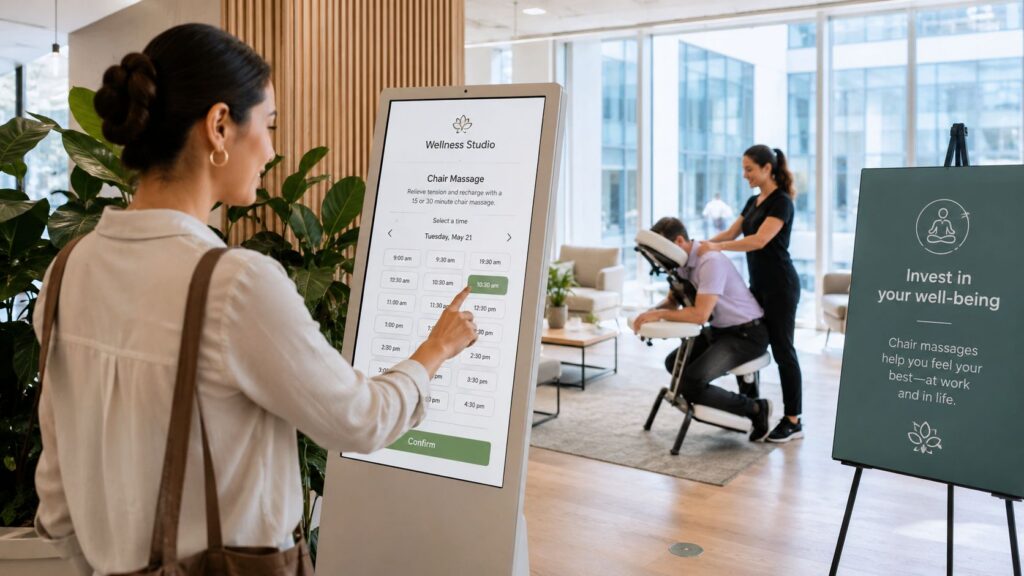
Offer appointments during predictable time blocks so employees can participate without interrupting important meetings or deadlines.
Make Participation Easy
Simple online scheduling and clear communication help maximize participation while reducing administrative work.
Choose Experienced Providers
Partner with licensed massage therapists who have experience working in professional office environments. Consistent scheduling, professionalism, and reliable communication help create a positive experience for employees.
Start Small
Many organizations begin with quarterly or monthly wellness events before expanding to recurring programs based on employee interest.
Measuring Success
Like any workplace initiative, chair massage programs should be evaluated using meaningful data.
Organizations may choose to monitor:
- Employee participation rates
- Repeat appointments
- Employee feedback
- Overall satisfaction with workplace wellbeing offerings
- Utilization trends over time
Collecting simple feedback helps organizations understand employee interest and identify opportunities for future wellbeing programming.
[IMAGE PLACEHOLDER – HR professional reviewing employee wellness metrics

Supporting Employee Engagement
Successful workplace wellbeing programs are built on accessibility. Employees are more likely to participate when programs are convenient, easy to understand, and require minimal disruption to their day.
Communicate clearly by explaining:
- How long each session lasts
- How to schedule appointments
- Where sessions will take place
- What employees should expect during their visit
Simple messaging encourages participation while helping employees feel comfortable trying the program for the first time.
Chair Massage as Part of a Workplace Wellbeing Strategy
Chair massage works best when combined with other workplace wellbeing initiatives rather than standing alone. Organizations may incorporate it alongside:
- Ergonomic assessments
- Stretching or movement breaks
- Stress management workshops
- Employee appreciation events
- Workplace wellbeing campaigns
Together, these programs create an environment that supports employee comfort, engagement, and productivity throughout the workday.
Final Thoughts
Small workplace improvements often make a meaningful difference in the employee experience. On-site chair massage provides employees with a convenient opportunity to recharge without leaving the office, making it an easy addition to many workplace wellbeing strategies.
When organizations invest in programs that support both employee comfort and workplace engagement, they create environments where employees are better equipped to perform at their best.
Excel Wellbeing Solutions partners with organizations to deliver professional on-site chair massage and customized workplace wellbeing programs that support employee engagement, productivity, and a positive workplace culture.
Suggested SEO Subtitle:
Learn how workplace chair massage can enhance employee wellbeing, increase engagement, and create a more productive work environment.