

Most organizations no longer question whether employee wellbeing matters.
The real question is whether the investment produces measurable business value.
That's the shift happening across large employers. Wellbeing programs are no longer treated as optional perks. They're increasingly tied to:
- Retention
- Productivity
- Workforce stability
- Manager effectiveness
- Absence reduction
For HR leaders, that changes the standard entirely.
If a wellbeing strategy cannot connect to workforce outcomes, it becomes difficult to defend during budget discussions.
Beyond Perks: The New Role of Wellbeing
The old model focused on isolated activities:
- A fitness challenge
- A wellbeing seminar
- A wellness stipend
That approach rarely changed workforce conditions in a meaningful way.
Modern employee wellbeing solutions are different. They function as an integrated support system designed to improve how employees work and recover over time.
Practical rule:
Stop presenting wellbeing as a cultural extra. Present it as a workforce performance strategy.
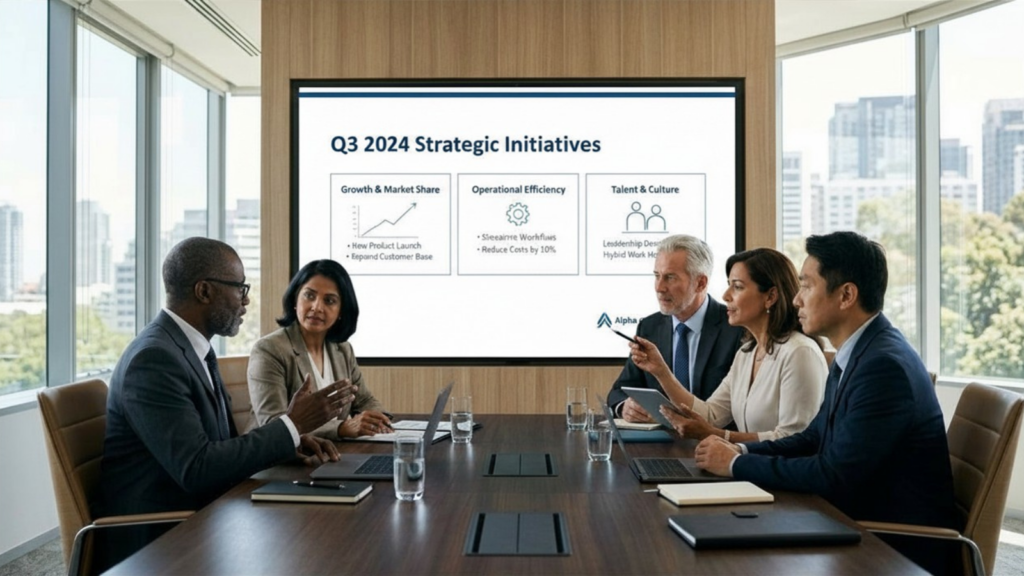
What Executive Teams Actually Need
Leadership teams are usually trying to answer four questions:
- What workforce problem are we solving?
- Which employee groups are most affected?
- Which interventions fit those groups?
- How will success be measured?
The strongest wellbeing solutions answer all four clearly.
What Modern Employee Wellbeing Solutions Look Like
Modern programs are not disconnected benefits.
They combine multiple forms of support into one coordinated system employees can actually use.
That system typically includes four connected areas:
1. Physical Wellbeing
Focuses on reducing fatigue, strain, and discomfort through:
- Ergonomics support
- Movement programs
- Recovery-focused services
- Nutrition guidance
The goal is work readiness—not simply activity.
2. Mental and Emotional Support
Strong programs make support:
- Visible
- Accessible
- Practical
This may include:
- Stress management tools
- Burnout prevention
- Manager conversations
- Counseling access
Employees should know where to go before issues escalate.
3. Financial Wellbeing
Financial pressure affects:
- Focus
- Productivity
- Attendance
- Retention risk
Effective support includes:
- Financial education
- Planning tools
- Practical guidance by life stage or workforce group
4. Social Wellbeing and Connection
Connection matters more in hybrid and distributed work environments.
This pillar supports:
- Team cohesion
- Recognition
- Inclusion
- Peer connection
Employees stay longer when they feel connected and supported.
Why Integration Matters
Employees do not experience stress in isolated categories.
Financial strain affects focus. Poor recovery affects energy. Weak manager support reduces participation across every area.
That's why disconnected wellness offerings usually underperform.
The strongest programs operate as one coordinated system.
Building the Business Case
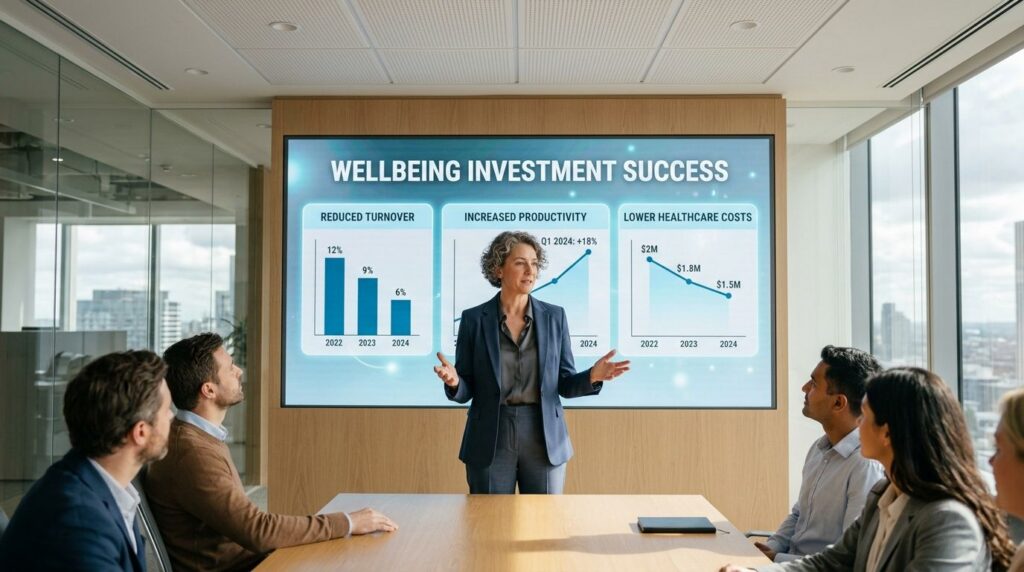
Wellbeing budgets survive when they connect to measurable workforce outcomes.
A strong business case focuses on:
- Reduced absence
- Improved productivity
- Lower turnover
- Reduced workforce strain
Executives approve programs faster when HR clearly shows:
- The operational problem
- The target workforce group
- The expected business impact
- The measurement plan
Focus on Business Outcomes, Not Vanity Metrics
Participation alone does not prove value.
A stronger executive narrative looks like this:
- We identified a workforce risk
- We targeted the affected employee group
- We matched interventions to the problem
- We measured workforce outcomes before and after implementation
That's what turns wellbeing into a defensible investment.
The Core Components of a Strong Program
Strong programs are designed around workforce risk—not perk variety.
Key principles:
- Build around real employee needs
- Segment by workforce type
- Prioritize manager involvement
- Keep access simple
- Measure consistently
If the experience is difficult to navigate, adoption will fall quickly.
Choosing the Right Wellbeing Partner
Many organizations choose vendors based on service lists instead of operational fit.
The better question is:
Can this partner support how our workforce actually works?
Key evaluation areas include:
- Workforce segmentation capability
- Flexible delivery (onsite, virtual, hybrid)
- Reporting quality
- Privacy standards
- Manager enablement
- Operational consistency
The Non-Negotiables
Segmented delivery
Office employees, field teams, remote workers, and shift-based populations require different approaches.
Strong reporting
Executives need clear reporting tied to:
- Participation
- Workforce outcomes
- Engagement by employee segment
Manager involvement
Managers heavily influence:
- Workload
- Team norms
- Participation behavior
Programs fail when managers are disconnected from the strategy.
A Practical Implementation Roadmap
The strongest rollouts are phased and focused.
Phase 1: Leadership and manager alignment
Managers must understand:
- Why the program matters
- What role they play
- How to support adoption
Phase 2: Workforce assessment
Segment by:
- Work environment
- Schedule type
- Role demands
- Access limitations
Different workforce groups require different delivery models.
Phase 3: Targeted launch
Avoid overwhelming employees with too many offerings.
Start with:
- High-priority workforce needs
- Clear use cases
- Relevant programming by employee group
Phase 4: Ongoing adjustment
Review:
- Participation patterns
- Manager engagement
- Workforce feedback
- Business outcomes
Adapt based on evidence—not assumptions.
Measuring Long-Term Impact
Strong programs measure three levels:
| Level | What It Measures |
| Adoption | Participation and repeat usage |
| Workforce impact | Burnout, absence, engagement |
| Business outcomes | Retention, productivity, workforce stability |
The key is segmentation.
Enterprise averages hide where programs are succeeding—or failing.
Use Measurement to Drive Decisions
A mature wellbeing strategy:
- Removes low-value offerings
- Expands high-impact services
- Adjusts delivery by workforce group
- Reallocates budget based on evidence
That's portfolio management—not program administration.
Final Takeaway
The best employee wellbeing solutions are not the ones with the most perks.
They are the ones that:
- Solve real workforce problems
- Fit how employees actually work
- Support managers
- Produce measurable business outcomes
That's what earns long-term executive support.
Excel Wellbeing Solutions helps organizations design employee wellbeing programs that combine physical, mental, financial, and social support into one measurable workforce strategy.
For HR leaders, the goal is clear: build programs employees trust—and leadership can defend with data.