
How HR Leaders Can Build High-Impact Leadership Wellness Programs That Deliver Business Results
Executive wellness programs are no longer viewed as executive perks—they are strategic investments in leadership performance, resilience, and organizational success. Today's executives face demanding schedules, constant decision-making, travel, and high levels of responsibility that can affect both individual wellbeing and business performance.
A well-designed executive wellness program helps leaders maintain their health, improve productivity, and support long-term organizational stability.

Why Executive Wellness Matters
Leaders influence every part of an organization, including culture, employee engagement, decision-making, and business growth.
Supporting executive wellbeing can help organizations:
- Improve leadership performance
- Reduce burnout
- Increase executive retention
- Strengthen succession planning
- Support better decision-making
- Promote a healthier workplace culture
When leadership performs well, the positive impact extends throughout the organization.
Build a Business-Focused Wellness Strategy
Successful executive wellness programs begin with clear organizational goals rather than individual perks.
Consider questions such as:
- What leadership challenges are most common?
- Which executives experience the highest levels of stress?
- What outcomes are most important?
- How will success be measured?
Defining these objectives helps align wellness initiatives with broader business priorities.
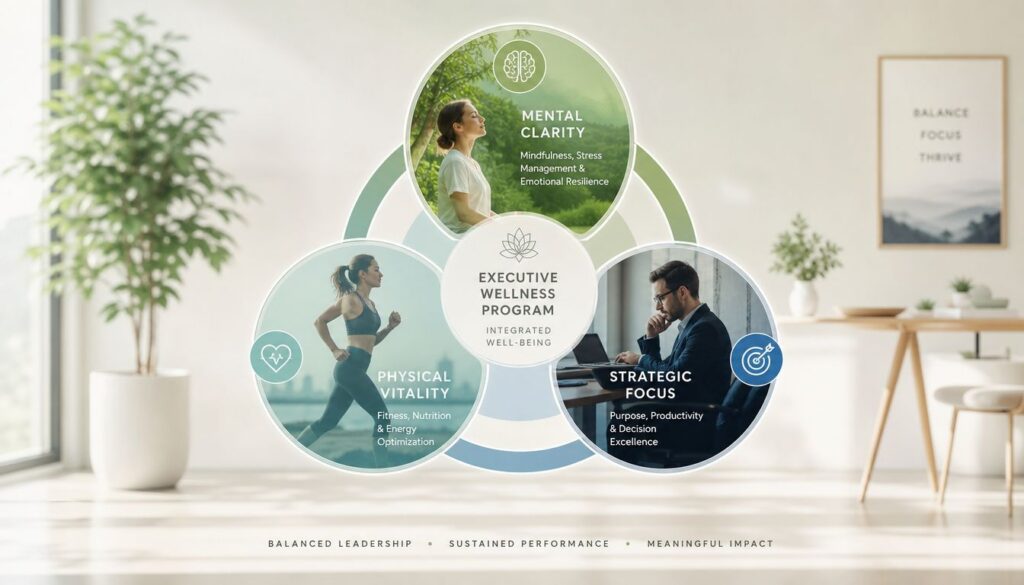
Core Elements of an Executive Wellness Program
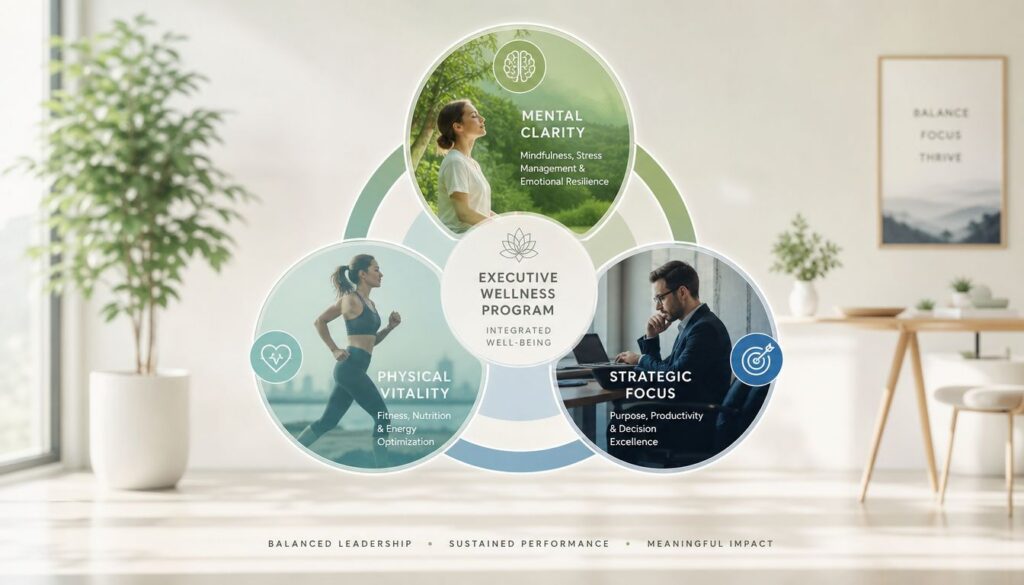
Most successful programs include a combination of services tailored to executive needs.
These may include:
- Health assessments
- Executive health coaching
- Stress management education
- Nutrition guidance
- Physical activity programs
- Sleep and recovery education
- Mental wellbeing resources
- Preventive health initiatives
Programs should be flexible enough to accommodate demanding schedules and frequent travel.
Choose the Right Delivery Model
Organizations should select a delivery model that best fits their leadership team.
Common approaches include:
Onsite Programs
Ideal for organizations where executives work from a central location.
Virtual Programs
Provide convenient access for remote or geographically dispersed leadership teams.
Hybrid Programs
Combine in-person and virtual services to maximize flexibility and participation.
Hybrid delivery often provides the greatest balance of accessibility and personalized support.
Measure Program Success
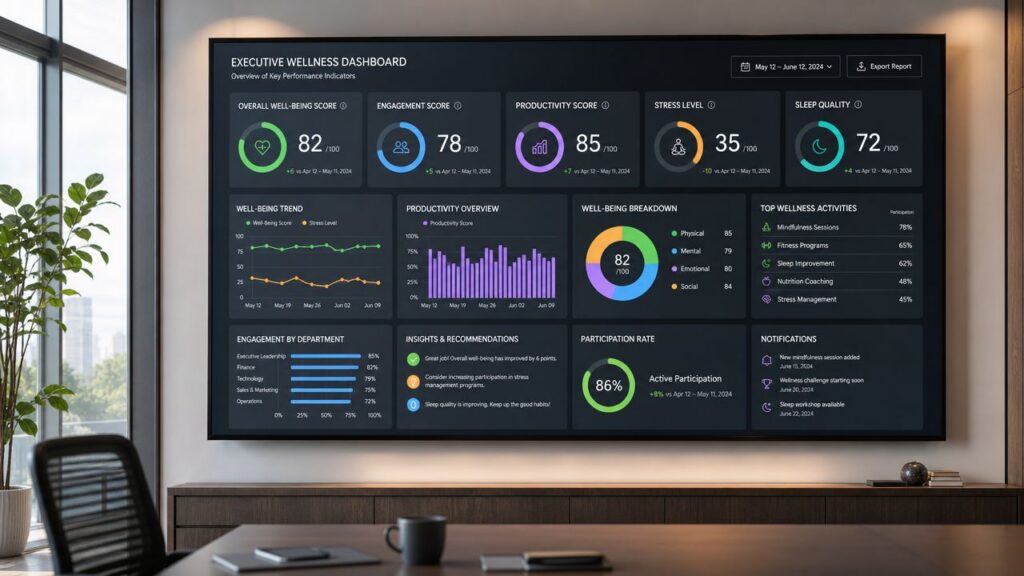
Executive wellness programs should be evaluated using meaningful business metrics.
Examples include:
- Participation rates
- Executive engagement
- Retention
- Leadership satisfaction
- Absenteeism
- Utilization of wellness resources
- Feedback from participants
Tracking results helps organizations continuously improve program effectiveness.
Protect Privacy and Build Trust
Confidentiality is essential for executive participation.
Organizations should clearly communicate:
- How personal information is protected
- Who has access to data
- How results are reported
- What information remains confidential
Aggregated reporting can help organizations evaluate program success while protecting individual privacy.
Implement Successfully
Launching an executive wellness program requires thoughtful planning.
Successful implementations often include:
- Leadership needs assessment
- Executive sponsorship
- Clear communication
- Defined program goals
- Ongoing education
- Regular program evaluation
Starting with a pilot group can help organizations refine the program before expanding participation.
Executive Wellness Supports the Entire Organization
When executives prioritize their own wellbeing, they model healthy workplace behaviors for the rest of the organization.
Strong leadership wellbeing can contribute to:
- Better communication
- Improved workplace culture
- Greater employee engagement
- More sustainable leadership practices
- Long-term organizational resilience
Final Thoughts
Executive wellness programs help organizations invest in one of their most valuable resources—their leaders. By combining personalized support, flexible delivery options, strong privacy practices, and measurable outcomes, organizations can build programs that benefit both executives and the business as a whole.
Excel Wellbeing Solutions partners with organizations to develop executive wellbeing strategies through leadership coaching, stress management education, ergonomic assessments, nutrition guidance, mental wellbeing programming, and workplace wellness initiatives designed to support healthier, more resilient leaders.