

How Emotional Intelligence Strengthens Leadership, Communication, and Workplace Performance
Strong communication and effective leadership are essential to a healthy workplace. Emotional intelligence helps employees and managers communicate more effectively, build stronger relationships, and respond thoughtfully during challenging situations.
Organizations that invest in workplace emotional intelligence development can improve collaboration, strengthen leadership, and support a more positive employee experience.

What Is Emotional Intelligence?
Emotional intelligence is the ability to recognize, understand, and manage emotions while interacting effectively with others.
In the workplace, emotional intelligence supports:
- Better communication
- Stronger teamwork
- Effective leadership
- Productive conflict resolution
- Improved employee engagement
These skills can be developed through education, coaching, and practical workplace experiences.
Key Components of Emotional Intelligence
Self-Awareness
Employees who understand their own emotions are better equipped to respond thoughtfully and communicate effectively.
Self-Management
Managing emotions during stressful situations helps employees remain professional and focused on solutions.
Empathy
Understanding the perspectives of others strengthens relationships, improves collaboration, and supports respectful workplace interactions.
Communication Skills
Clear communication encourages teamwork, improves feedback conversations, and helps build trust throughout the organization.

Why Emotional Intelligence Matters
Organizations benefit when employees work well together and communicate effectively.
Developing emotional intelligence can help:
- Improve collaboration
- Strengthen leadership skills
- Support employee engagement
- Reduce workplace conflict
- Create a more positive workplace culture
These skills become especially valuable during organizational change, busy work periods, and leadership transitions.
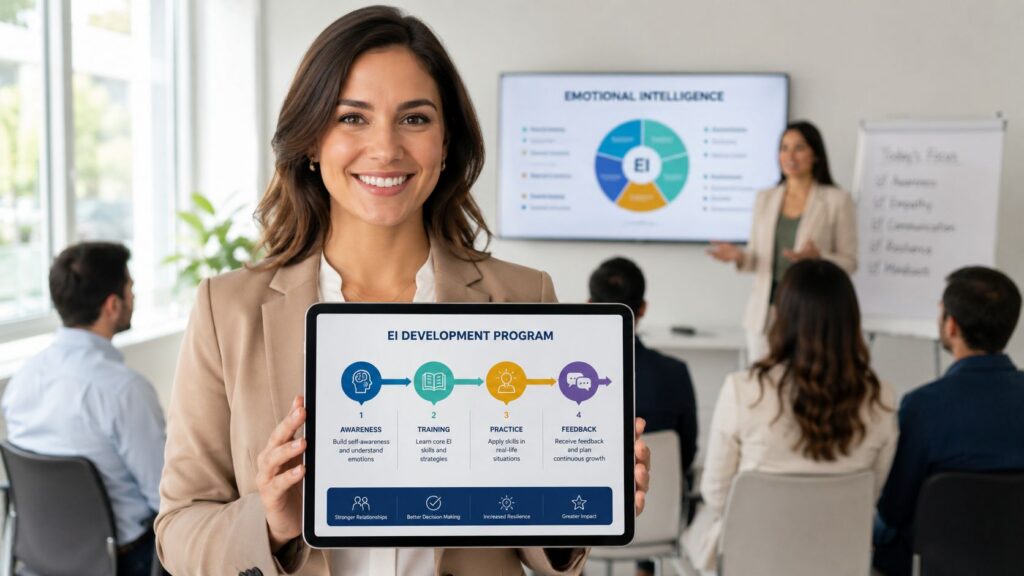
Developing Emotional Intelligence in the Workplace
Successful development programs focus on practical skills employees can apply every day.
Organizations may support emotional intelligence through:
- Leadership development
- Manager training
- Communication workshops
- Coaching sessions
- Team-building activities
Learning opportunities are most effective when they include practice, feedback, and ongoing reinforcement.
Measuring Success
Organizations should evaluate emotional intelligence initiatives using meaningful workplace measures such as:
- Employee engagement
- Manager effectiveness
- Team collaboration
- Employee feedback
- Leadership development progress
Regular evaluation helps ensure training continues to meet employee and organizational needs.
Building a Culture of Emotional Intelligence
Creating a workplace that values emotional intelligence requires consistent leadership and clear expectations.
Leaders can reinforce these skills by:
- Modeling respectful communication
- Encouraging active listening
- Providing constructive feedback
- Recognizing positive collaboration
- Supporting continuous learning
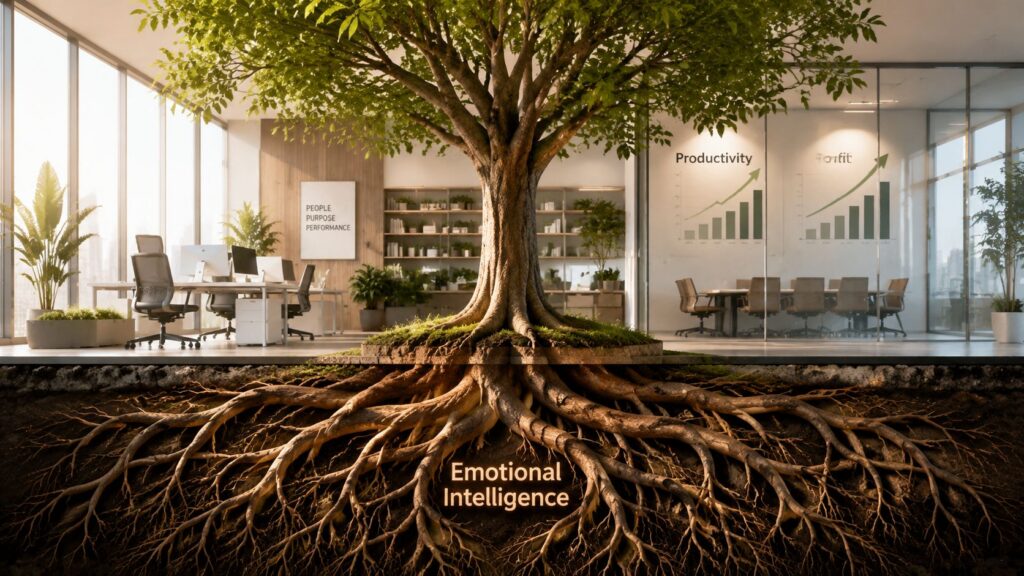
When emotional intelligence becomes part of everyday workplace interactions, organizations strengthen both employee wellbeing and overall performance.
Final Thoughts
Workplace emotional intelligence development helps employees build stronger relationships, communicate more effectively, and navigate workplace challenges with confidence.
By investing in leadership development and communication skills, organizations can create a workplace culture that supports employee wellbeing, engagement, and long-term success.
Excel Wellbeing Solutions partners with organizations to deliver onsite and virtual seminars, coaching, and workplace wellbeing programs that strengthen leadership, communication, and employee engagement.