
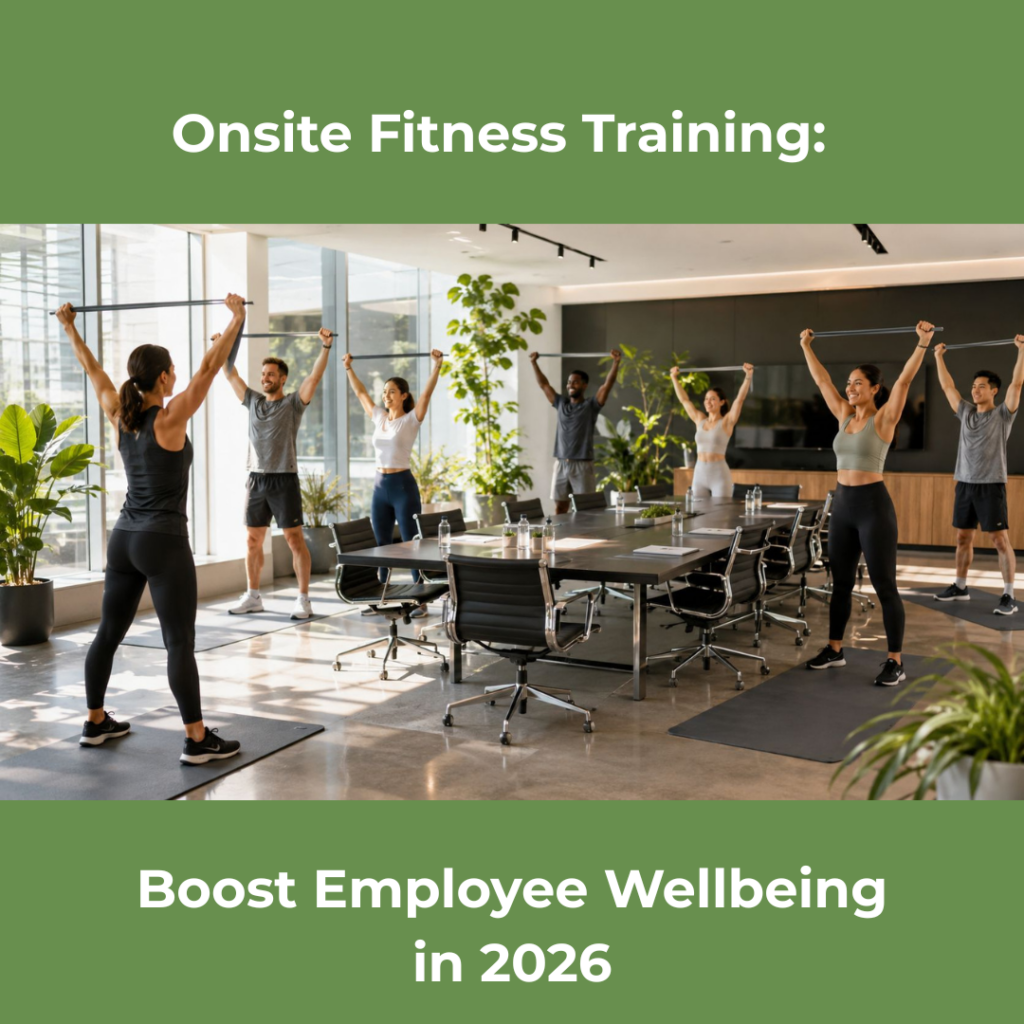
Onsite fitness training becomes much more valuable when it's viewed as a workforce strategy rather than a workplace perk.
For HR leaders, the conversation is no longer about offering exercise classes. It's about improving employee experience, supporting workforce wellbeing, and creating programs that contribute to measurable business outcomes.
The strongest onsite fitness programs are designed around how employees actually work, participate, and engage—not around the availability of a conference room or spare fitness equipment.
Why Onsite Fitness Matters
Organizations continue to face challenges related to:
- Employee engagement
- Retention
- Workplace stress
- Absence trends
- Return-to-office participation
Onsite fitness training can support these priorities when it is positioned as part of a broader wellbeing strategy.
Practical rule:
The business case should focus on workforce outcomes first and fitness activities second.
Leadership is more likely to support programs that address specific challenges such as:
- Low wellbeing engagement
- Workforce fatigue
- Weak onsite experience
- Retention pressure in key teams
The clearer the business problem, the stronger the proposal becomes.
Start With Workforce Reality
Successful programs reflect how employees actually work.
Different populations need different approaches.
Examples include:
Office-based employees
Often respond well to:
- Mobility sessions
- Strength training
- Lunch-hour fitness classes
Shift-based employees
Typically need:
- Flexible scheduling
- Shorter sessions
- Pre-shift or post-shift options
Physically demanding roles
Often benefit from:
- Recovery-focused sessions
- Movement coaching
- Injury prevention support
Participation increases when programs fit existing work patterns instead of competing with them.
Build a Strong Business Case
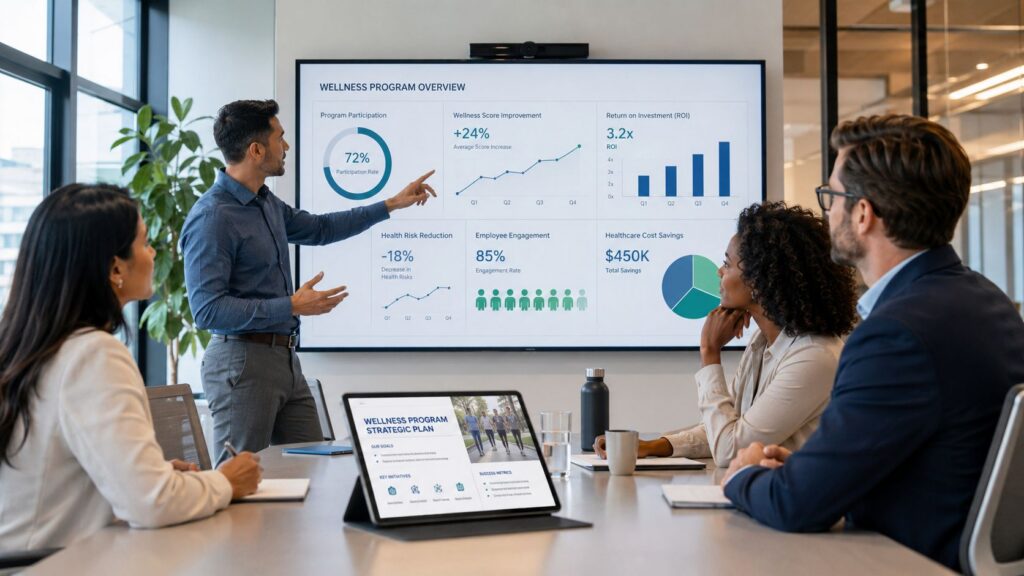
Senior leaders rarely approve a program simply because it sounds beneficial.
They want to understand:
- Who the program serves
- What workforce issue it addresses
- How participation will be measured
- What outcomes will define success
A practical planning framework should answer four questions:
| Question | Example |
| What problem are we solving? | Absence, retention, engagement, or workforce fatigue |
| Who is the target audience? | Specific sites, departments, or employee groups |
| What will we offer? | Group training, coaching, mobility sessions, or a blended model |
| How will success be measured? | Participation, repeat attendance, employee feedback, and workforce outcomes |
Starting with a pilot often creates the strongest business case because it allows leadership to evaluate real results before expanding.
Launch as a Pilot, Not a Promise
Strong programs are tested before they are scaled.
A pilot should:
- Focus on one workforce group or location
- Define success measures in advance
- Track participation and barriers
- Gather employee feedback
- Review outcomes consistently
Attendance matters, but repeat participation matters more.
The goal is to determine whether employees find the program valuable enough to make it part of their routine.
Designing the Right Environment
Convenience has a major impact on participation.
Employees are more likely to join when:
- The location is easy to access
- Sessions start on time
- Expectations are clear
- Participation feels simple
The most successful programs remove friction wherever possible.
Match the Space to the Program
The fitness space does not need to be elaborate.
It needs to support the experience you're trying to create.
Common options include:
Multi-purpose rooms
Ideal for:
- Mobility sessions
- Stretching classes
- Educational workshops
- Small-group fitness
Dedicated fitness areas
Best for:
- Recurring classes
- Strength training
- Ongoing coaching programs
Flexible workplace spaces
Useful for:
- Large campuses
- Multiple departments
- Short-duration sessions
The right space is the one employees can consistently access.
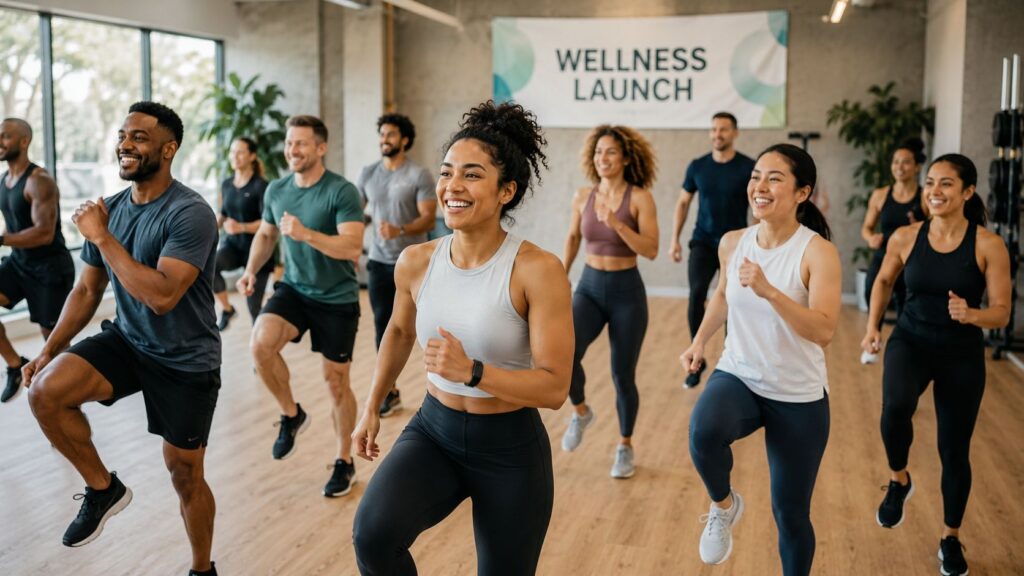
Build Schedules Around Employee Behavior
The best timetable is rarely the most ambitious one.
Successful schedules account for:
- Shift patterns
- Meeting density
- Commute times
- Hybrid work schedules
Consistency often matters more than variety.
Employees are more likely to participate when sessions occur at predictable times.
Keep Equipment Practical
Many organizations spend too much on equipment and not enough on delivery.
A skilled instructor with simple equipment often creates a better experience than a room full of underused machines.
Prioritize:
- Mats
- Resistance bands
- Adjustable weights
- Mobility tools
- Equipment suitable for multiple fitness levels
Flexibility should guide purchasing decisions.
Choosing the Right Fitness Partner
The provider you choose has a direct impact on participation, safety, reporting, and long-term program success.
A strong workplace fitness partner should be able to explain:
- How programs are customized
- How different fitness levels are supported
- What reporting is available
- How trainer absences are handled
- How communication is managed
The strongest providers operate as workforce wellbeing partners rather than individual instructors.
Questions Worth Asking
Before selecting a provider, ask:
- How do you support mixed fitness levels?
- How do you adapt sessions for employee limitations?
- What participation data is reported?
- How do you handle schedule changes?
- What experience do you have working in corporate environments?
The quality of these answers often reveals more than the class catalog.
Prioritize Safety and Accessibility
Workplace fitness programs should be welcoming to all employees—not just experienced exercisers.
Strong programs include:
- Beginner-friendly options
- Exercise modifications
- Clear class descriptions
- Simple intake processes
- Appropriate safety procedures
Accessibility improves both participation and trust.
Employees are more likely to join when they know the experience can be adapted to their needs.
Driving Participation and Engagement
Participation doesn't come from marketing alone.
Employees join programs when they feel:
- Comfortable
- Supported
- Included
- Confident they can succeed
The strongest launches focus on reducing uncertainty.
Make the First Experience Easy
Successful programs often include:
- Beginner-focused sessions
- Instructor introductions
- Clear expectations
- Visible manager support
- Easy registration
Employees are far more likely to return after a positive first experience.
Build Consistent Habits
Long-term engagement depends on routine.
Strong participation models often include:
- Consistent schedules
- Multiple class formats
- Clear re-entry options
- Ongoing communication
The goal is to help fitness become part of the workplace rhythm.
Use Feedback to Improve
Employee feedback is one of the most useful tools for improving participation.
Look for patterns around:
- Scheduling
- Class difficulty
- Location convenience
- Instructor effectiveness
- Employee confidence
Small adjustments often produce significant participation gains.
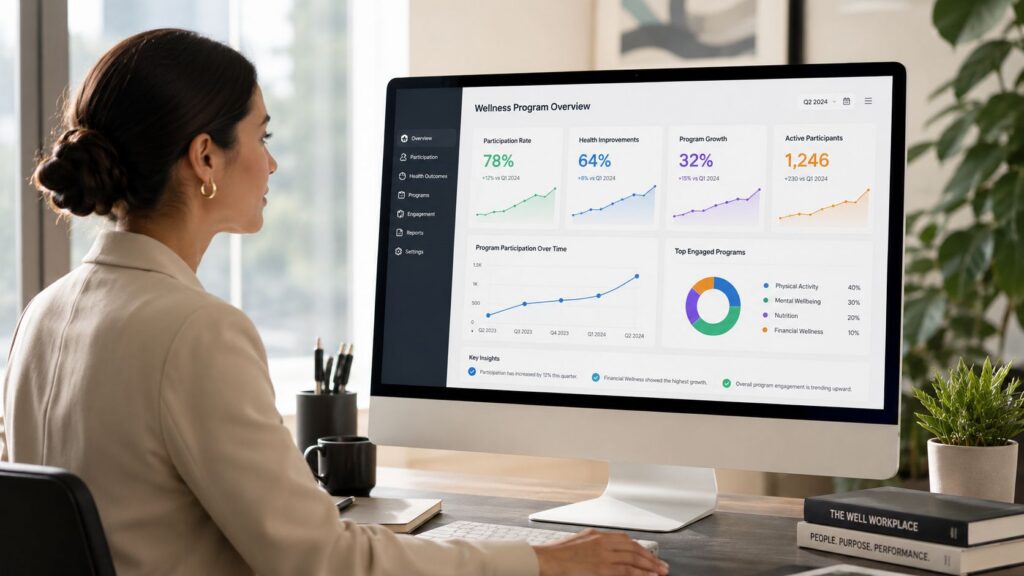
Measuring Success
Participation is only one part of the story.
A stronger measurement framework evaluates:
| Area | Examples |
| Program Activity | Attendance, enrollment, repeat participation |
| Employee Experience | Satisfaction, accessibility, feedback |
| Workforce Outcomes | Engagement, retention, absence trends |
| Business Impact | Alignment with broader wellbeing goals |
The goal is not simply to prove people attended.
The goal is to understand whether the program is creating value for employees and the organization.
Scale Only After the Model Works
Organizations often expand too quickly.
Before scaling, confirm:
- Participation is consistent
- Delivery is reliable
- Different employee groups are engaging
- Reporting supports the original business case
Growth should be driven by evidence, not enthusiasm.
Final Takeaway
Onsite fitness training creates the most value when it is designed around workforce needs, participation habits, and measurable business outcomes.
The strongest organizations:
- Start with a clear workforce challenge
- Build programs around employee realities
- Remove participation barriers
- Measure outcomes consistently
- Expand based on evidence
That is what turns onsite fitness training from a workplace perk into a workforce wellbeing strategy.
Excel Wellbeing Solutions helps organizations deliver onsite and virtual fitness programs, personal training, educational seminars, and workplace wellbeing services that support employee engagement and organizational performance.
For HR leaders, the goal is simple: create programs employees can realistically use and leadership can confidently evaluate.