
Your CFO is not asking whether your wellbeing program is well-intentioned.
They're asking whether it deserves another budget cycle.
That's what makes wellness program ROI such an important topic for HR leaders. Most organizations can explain why their programs matter. Far fewer can demonstrate value in a way that stands up to financial scrutiny.
Participation alone isn't enough.
A credible ROI framework connects program investment to measurable workforce outcomes and explains how those outcomes support broader business goals.
Move Beyond Participation Metrics
One of the most common mistakes in ROI discussions is focusing too heavily on activity metrics.
Registration numbers, attendance rates, and employee feedback all matter. But none of them answer the question executives ultimately care about:
What changed because the program exists?
A stronger approach looks at value through multiple lenses:
- Absence trends
- Retention patterns
- Productivity indicators
- Workforce stability
- Employee experience
The goal is not to prove everything at once.
The goal is to create a clear and defensible chain between investment and outcomes.
Start With Business Objectives
ROI measurement should begin before a program launches.
The first step is defining which workforce outcomes should improve if the strategy succeeds.
Examples include:
| Strategic Goal | Workforce Outcome |
| Improve wellbeing | Higher utilization and awareness |
| Reduce disruption | Lower unplanned absence |
| Improve performance | Fewer productivity barriers |
| Strengthen retention | Lower turnover in key groups |
| Increase program value | Better adoption among high-need populations |
This shifts the conversation away from activity and toward impact.
Separate Leading and Lagging Indicators
One reason ROI discussions become difficult is that different metrics move at different speeds.
Leading indicators
These show whether the program is gaining traction:
- Participation
- Repeat usage
- Awareness
- Satisfaction
- Manager support
These measures often improve first.
Lagging indicators
These show longer-term business impact:
- Retention
- Absence
- Productivity
- Workforce stability
These measures take longer to appear but are often the most important to leadership.
Practical rule:
Leading indicators show whether the program is working. Lagging indicators show whether the business case is working.
Build Governance Before Launch
Strong ROI reporting requires clear ownership.
A practical model often looks like this:
- HR owns participation and employee experience
- Finance validates assumptions and cost calculations
- People analytics manages workforce metrics
- Operations helps translate outcomes into business impact
- Executive sponsors align reporting with business priorities
Without ownership, ROI becomes everyone's responsibility—and nobody's.
Gather the Right Data
Most organizations already have the data they need.
The challenge is bringing it together consistently.
Focus on five core categories:
- Program costs
- Participation data
- Absence trends
- Retention metrics
- Employee feedback
Claims data may be useful, but it should rarely be the only measure of value.
Normalize Before Comparing
Raw numbers can create misleading conclusions.
Whenever possible, compare results using consistent units such as:
- Per eligible employee
- Per participant
- Per location
- Pre-launch vs. post-launch
Consistency matters more than complexity.
A simple model with clean assumptions will outperform a sophisticated model built on inconsistent data.
Converting Data Into ROI
The basic formula is straightforward:
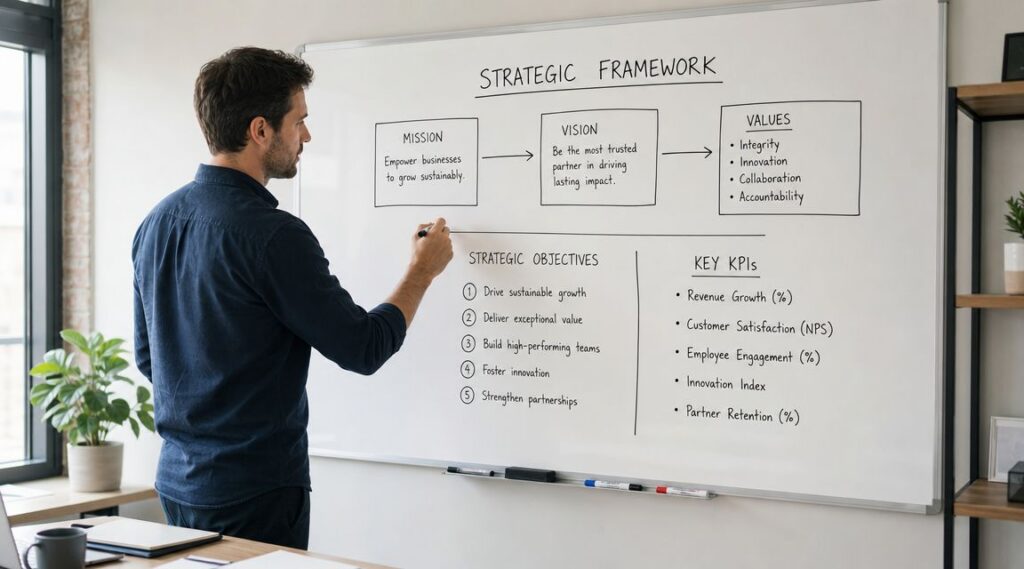
ROI = (Savings – Costs) ÷ Costs
The challenge is estimating savings realistically.
Include All Costs
Many organizations underestimate program costs.
Your calculation should include:
- Vendor fees
- Incentives
- Internal administration
- Communications
- Reporting and measurement
A conservative ROI estimate is more credible than an inflated one.
Calculate Savings Separately
Instead of combining all benefits into one number, evaluate them individually.
Potential categories include:
- Reduced absence
- Improved retention
- Productivity improvements
- Benefits cost trends
Separating savings streams makes the model easier to explain and defend.
Use Ranges Instead of Certainty
Executive audiences usually respond better to scenarios than precise predictions.
Consider presenting:
Conservative scenario
Only directly measured savings
Expected scenario
Measured savings plus validated retention impact
Long-term scenario
Additional workforce productivity improvements
This demonstrates discipline and transparency.
Pair ROI With VOI
Not every benefit can be converted into dollars immediately.
That's where Value on Investment (VOI) becomes useful.
Examples include:
- Employee trust
- Manager confidence
- Workforce engagement
- Program credibility
- Employee experience improvements
These outcomes matter even when exact financial value is difficult to quantify.
Presenting Results to Leadership
The strongest ROI presentations start with the decision—not the methodology.
Executives typically want answers to four questions:
- What did we invest?
- What changed?
- What can we defend financially?
- What should happen next?
If the audience understands those answers, the supporting data becomes much easier to discuss.
Anticipate Common Questions
Leadership teams usually challenge three areas:
- Attribution
- Timing
- Cost assumptions
Addressing these questions directly builds credibility.
A statement like:
"We can confidently defend these savings today. Additional outcomes are still being evaluated."
often carries more weight than an aggressive ROI claim.
Use ROI to Improve the Program
The most valuable ROI exercise is not the annual report.
It's the decisions that come afterward.
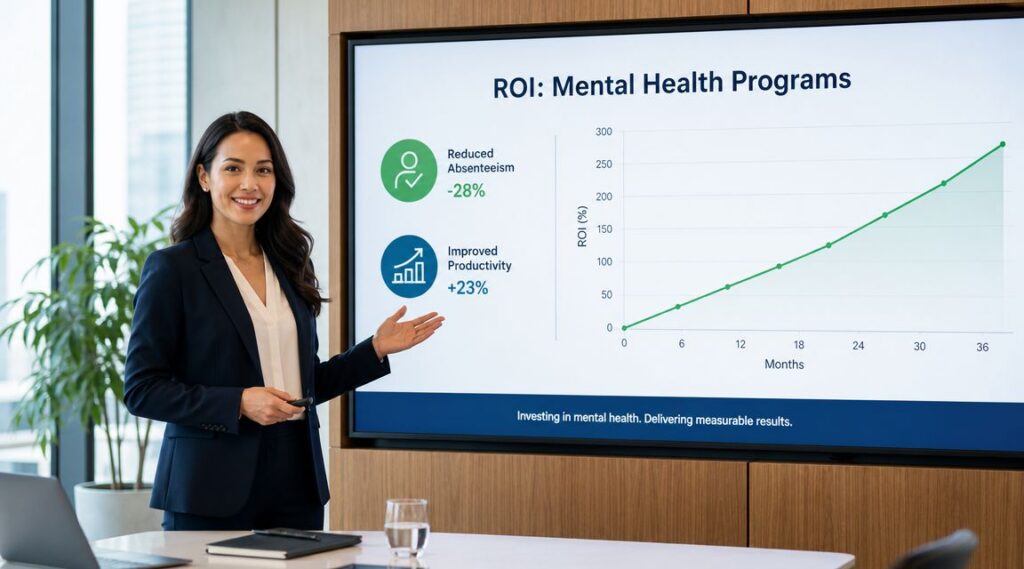
ROI should help organizations identify:
- Which offerings deserve expansion
- Which employee groups need more support
- Which resources are underperforming
- Where budget should be reallocated
That's when measurement becomes a management tool instead of a reporting exercise.
Final Takeaway
Wellness program ROI is not about proving that every activity worked.
It's about understanding where investment creates measurable workforce value.
The strongest organizations:
- Measure consistently
- Use conservative assumptions
- Connect programs to business outcomes
- Improve based on evidence
That's what turns ROI from a finance exercise into a strategic advantage.
Excel Wellbeing Solutions helps organizations measure workforce wellbeing initiatives through practical ROI frameworks, reporting support, and outcome-focused program design.
For HR leaders, the goal is simple: build a model executives trust and use the insights to make smarter investment decisions.