

Workplace mental health programs are increasingly viewed as part of workforce risk management—not employee perks.
For employers focused on retention, manager capacity, workforce stability, and performance, the question is no longer whether support should exist.
The question is whether the program can produce meaningful outcomes employees trust and leaders can measure.
Many organizations already offer resources. The challenge is that employees often:
- Don't know what exists
- Don't trust confidentiality
- Can't access support easily
- Don't use resources until problems escalate
A successful program solves those barriers first.
Why This Matters to Business Leaders
Workforce strain affects more than employee experience.
It shows up in:
- Absence patterns
- Turnover pressure
- Manager escalation
- Team conflict
- Productivity disruption
The earliest warning signs are often operational:
- Service targets begin slipping
- Managers spend more time handling people issues
- High-value employees leave during periods of sustained pressure
- Teams struggle to recover after demanding periods
These are workforce issues—not simply wellbeing issues.
What Leaders Often Miss
Many organizations focus on adding support resources while leaving the underlying causes of strain unchanged.
Common examples include:
- Chronic workload pressure
- Understaffing
- Role ambiguity
- Inconsistent manager practices
- Difficult access pathways
Support resources matter.
But no workshop or app can solve a work environment that continuously creates unnecessary friction.
Practical rule:
Build the business case around the workforce problems you're trying to reduce—and measure those outcomes from day one.
Start With a Needs Assessment
Most unsuccessful programs make the same mistake:
They buy solutions before diagnosing the problem.
Before selecting vendors or launching initiatives, identify:
- Where workforce strain exists
- Which employee groups face the biggest barriers
- What managers are struggling to handle
- Where current support systems break down
Review Existing Signals First
Organizations often already have valuable information.
Look at:
- Absence trends
- Turnover patterns
- Exit feedback
- Employee relations themes
- Current support utilization
These data points often reveal workforce friction before surveys do.
Talk to Employees Directly
Data helps identify patterns.
Employees explain why those patterns exist.
Use:
- Listening sessions
- Manager roundtables
- Leadership interviews
- Targeted pulse surveys
Ask practical questions:
- What makes work harder than it should be?
- What support feels difficult to access?
- What prevents employees from using available resources?
The answers are usually more useful than assumptions.
Segment the Workforce Early
Enterprise programs fail when leaders design for an "average employee."
Different groups face different challenges.
Examples include:
- Frontline employees
- Shift workers
- Caregivers
- Remote teams
- Managers
- High-pressure operational roles
A strong strategy usually includes:
- Core support for everyone
- Targeted resources for higher-pressure groups
- Manager-specific guidance
- Flexible access by workforce type
Build a Layered Program
The strongest workplace wellbeing strategies are built in layers.
Core Support
Every employee should be able to:
- Find support easily
- Understand what is available
- Access resources confidentially
Core elements often include:
- Simple navigation
- Manager guidance
- Educational sessions
- Confidential support pathways
If the foundation is weak, additional services won't fix it.
Enhanced Support
Some employees need more than awareness and education.
Examples include:
- Coaching
- Stress management workshops
- Resilience programs
- Manager support resources
- Referral pathways
These offerings should complement—not replace—strong management practices and healthy work design.
Specialized Support
Some populations require additional flexibility due to:
- Privacy concerns
- Job demands
- Work schedules
- Workforce location
The goal is not to create one pathway.
The goal is to create multiple pathways employees trust.
Driving Engagement and Adoption
A program can be well designed and fully funded—and still fail.
The reason is usually trust.
Low engagement often means one of four things:
- Employees don't know the resource exists
- They don't understand when to use it
- They don't trust confidentiality
- Managers unintentionally discourage participation
Engagement should be treated as a design challenge—not a marketing challenge.
Managers Are the Activation Layer
Employees often decide whether support feels safe based on their manager's behavior.
Managers should be trained to:
| Capability | Why It Matters |
| Recognize strain early | Managers see changes before formal systems do |
| Respond appropriately | Support without becoming counselors |
| Refer employees effectively | Provide clear next steps |
| Adjust workload where possible | Address causes, not just symptoms |
Manager behavior influences participation more than posters, emails, or awareness campaigns.
Communicate Around Real Work Moments
The most effective communication happens when employees actually need support.
Examples include:
- Organizational change
- Peak workload periods
- Team restructuring
- Leadership transitions
- Extended periods of pressure
Relevance drives engagement more effectively than awareness alone.
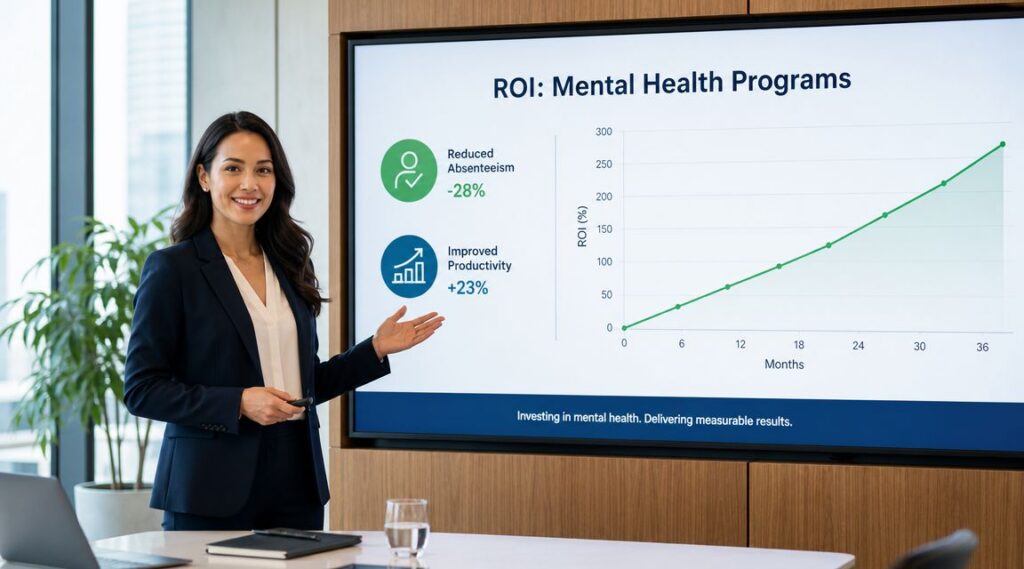
Measuring Program Impact
Participation is important.
But participation is not proof of value.
A stronger approach measures:
- Access
- Trust
- Manager behavior
- Workforce outcomes
Structure Measures
Track whether the organization created the conditions for success.
Examples:
- Manager training completion
- Governance structure
- Policy clarity
- Referral processes
- Accountability ownership
Process Measures
Measure whether the program works in practice.
Examples:
- Awareness levels
- Ease of access
- Referral activity
- Workforce segment participation
- User experience feedback
Outcome Measures
Track longer-term workforce indicators such as:
- Employee wellbeing
- Retention trends
- Absence patterns
- Burnout risk indicators
- Employee relations concerns
Measurement rule:
If attendance is the strongest metric in the report, the business case is still incomplete.

Selecting the Right Partners
Organizations often budget around vendor offerings instead of workforce needs.
A stronger approach starts with workforce challenges and then selects partners that support those goals.
Look for:
- Strong privacy practices
- Workforce-specific flexibility
- Meaningful reporting
- Manager enablement
- Clear implementation plans
- Experience across different employee populations
The best solution is rarely the largest package.
It's the one employees can realistically access and leaders can confidently evaluate.
Final Takeaway
Workplace mental health programs create value when they are designed around workforce realities—not vendor features.
The strongest programs:
- Improve access
- Support managers
- Reduce friction
- Build trust
- Measure outcomes that matter
That's what turns wellbeing support into a workforce strategy.
Excel Wellbeing Solutions helps organizations build practical workplace wellbeing strategies through workshops, employee experiences, manager support resources, and engagement initiatives that fit within a measurable workforce plan.
For HR leaders, the goal is simple: create support systems employees trust and leadership can defend with confidence.