
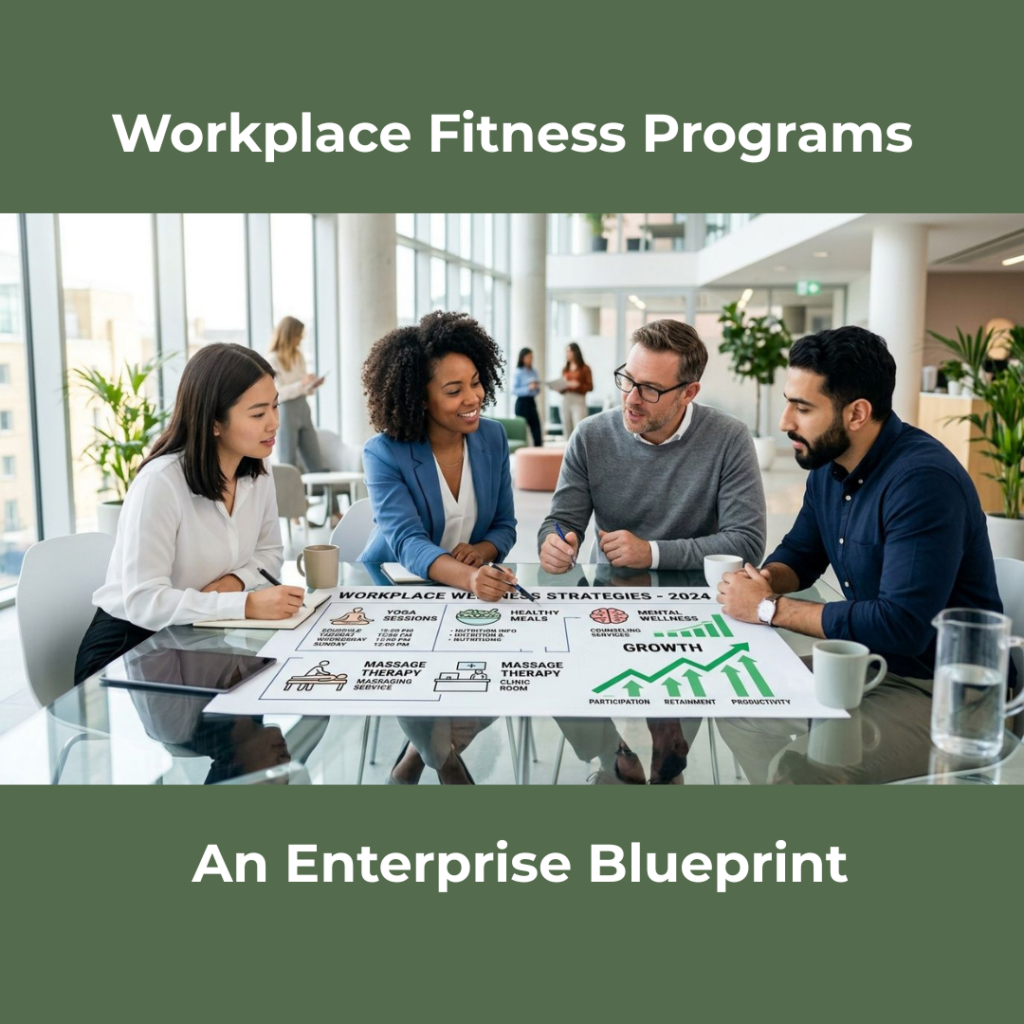
Workplace fitness programs are no longer viewed as optional perks.
For large organizations, they are increasingly tied to:
- Productivity
- Retention
- Workforce consistency
- Employee experience
- Absence reduction
That changes how these programs should be designed.
The strongest organizations don't start with gym subsidies or fitness challenges. They start with workforce realities, operational constraints, and measurable business goals.
Why Fitness Programs Matter at Enterprise Scale
Executives are not funding exercise for its own sake.
They are investing in:
- Sustainable workforce performance
- Lower absence risk
- Better employee experience
- Improved retention
- More consistent day-to-day output
But enterprise scale creates complexity.
A fitness program that works for headquarters employees may completely fail for:
- Shift workers
- Remote teams
- Field employees
- Distributed operations
That's why workplace fitness programs require coordination across:
- HR
- Operations
- Finance
- Communications
- Facilities
- Leadership teams
What Leadership Is Really Approving
In practice, leadership is approving a workforce support system.
That system should:
- Improve energy and recovery
- Support sustainable performance
- Fit different work environments
- Connect with broader wellbeing strategy
Practical rule:
If participation only works for office employees with schedule flexibility, the program is not ready for enterprise rollout.
Why Generic Programs Fail
Many programs stall because they are built around convenience—not workforce reality.
Common problems include:
- Fixed schedules that exclude frontline teams
- Low manager support
- Poor communication
- Weak reporting
- Limited accessibility
Participation clusters in one part of the organization while other groups disengage completely.
Strong enterprise programs are designed for adoption across the full workforce—not just the easiest-to-reach employees.
Start With a Workforce Audit
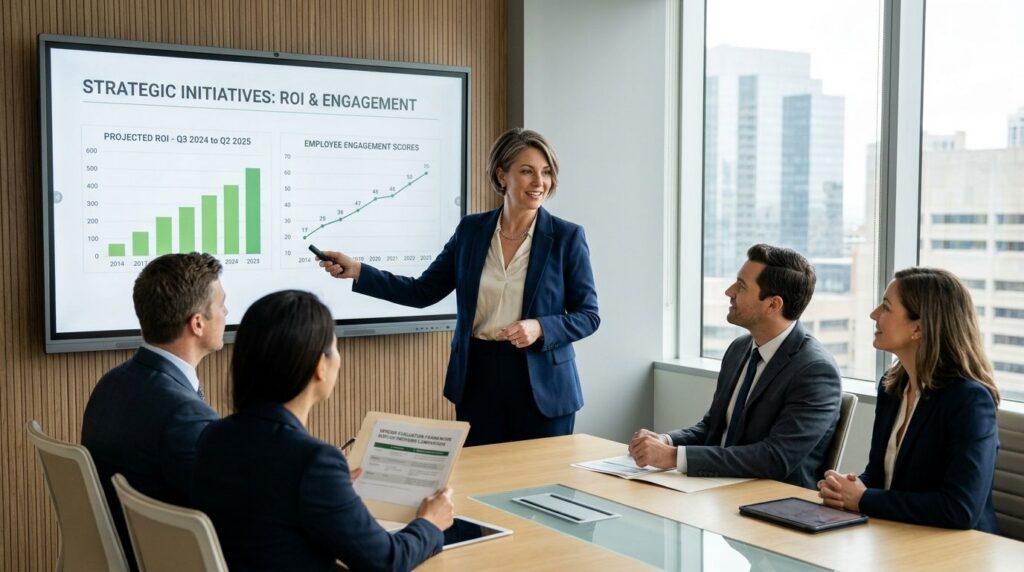
Before choosing activities, map how employees actually work.
Segment by:
- Role type
- Schedule pattern
- Work environment
- Location
- Manager structure
- Access limitations
Then identify barriers to participation.
In large organizations, the most common friction points are:
- Time pressure
- Shift coverage
- Commuting demands
- Inconsistent manager support
- Limited flexibility
Build Inclusion Into the Design
Programs become exclusionary long before launch if they assume one employee experience.
Strong enterprise programs include:
- Beginner-friendly options
- Low-impact and adaptive formats
- Virtual and onsite access
- Flexible participation windows
- Clear, simple communication
Accessibility is both a workforce issue and a business issue.
Turn Audit Findings Into Business Goals
Broad goals like “improve wellbeing” are too vague.
Better goals are tied to measurable workforce conditions.
Workforce experience goals
Examples:
- Improve participation among shift workers
- Increase access across remote teams
- Reduce engagement gaps between locations
Operating goals
Examples:
- Support energy and recovery in high-strain roles
- Reduce fatigue-related complaints
- Improve consistency in demanding teams
Culture goals
Examples:
- Improve connection in hybrid environments
- Strengthen manager support behaviors
- Support post-acquisition integration
A strong goal should be:
- Specific
- Measurable
- Operationally realistic
Designing a Scalable Fitness Program
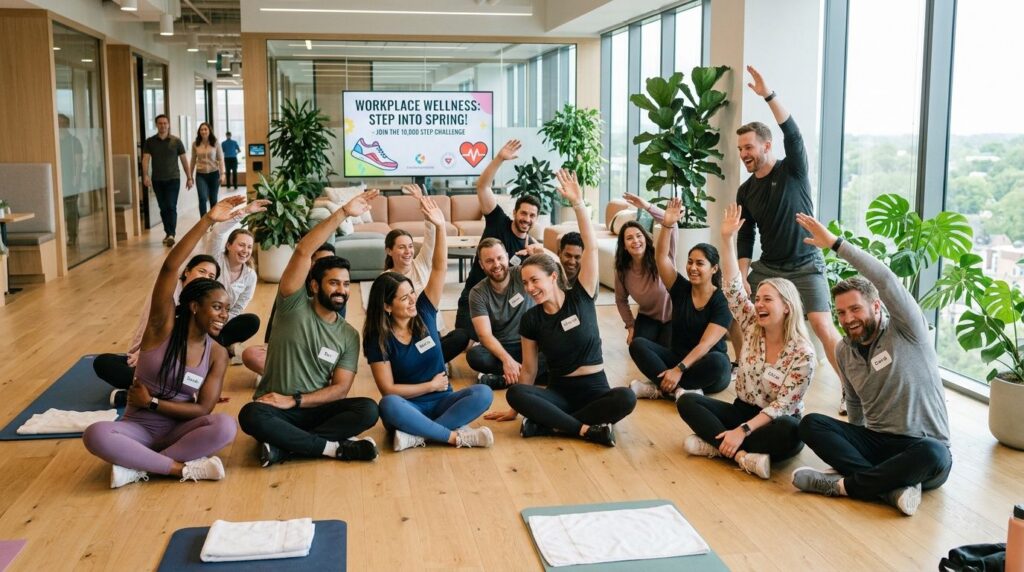
Enterprise programs work best when they operate as a portfolio—not a single offering.
Different formats solve different problems.
Common delivery models
| Model | Best Use |
| Onsite classes | Large hubs and office populations |
| Virtual live sessions | Hybrid and distributed teams |
| On-demand content | Flexible access across schedules |
| Gym subsidies | Employees already motivated to participate |
| Team challenges | Short-term engagement and visibility |
| Small-group coaching | Higher-risk or targeted populations |
Most large organizations use a blended model.
Build Around Behavior, Not Just Activity
Fitness alone rarely delivers long-term workforce impact.
The strongest programs combine movement with:
- Recovery support
- Nutrition guidance
- Stress management
- Coaching and accountability
The goal is not activity minutes.
The goal is sustained workforce performance.
Standardize the System, Customize the Experience
Enterprise programs usually fail in one of two ways:
- Too fragmented to manage consistently
- Too standardized to feel relevant
A stronger model keeps:
- Governance
- Reporting
- Privacy standards
- Enrollment processes
consistent across the organization, while adapting delivery by workforce type and location.
Building the Business Case
Fitness programs earn support when they are tied to workforce outcomes—not participation alone.
Executives want to understand:
- Which workforce problem is being addressed
- What adoption is realistic
- How success will be measured
- What outcomes justify continued investment
Budget Beyond the Program Itself
The actual program is only one part of the cost.
Enterprise programs also require:
- Communications
- Manager enablement
- Reporting and analytics
- Operational coordination
- Vendor oversight
Strong adoption requires infrastructure—not just classes.

Choosing the Right Vendor
The best vendor is not the one with the longest service menu.
It's the one that fits your workforce and operating model.
Key evaluation areas:
- Workforce segmentation capability
- Accessibility and inclusion
- Reporting quality
- Enterprise implementation support
- Privacy standards
- Multi-site coordination experience
Red Flags to Watch For
Be cautious of:
- One-size-fits-all delivery
- Participation-heavy reporting without business metrics
- Weak implementation support
- Overreliance on apps or portals alone
If the vendor cannot explain how adoption will work across different workforce groups, the program will struggle after launch.
Creating a Strong Launch Strategy
Strong launches feel coordinated—not overwhelming.
Employees need to understand:
- What the program is
- Why it matters
- How to access it
- Whether participation is supported by leadership
What strong launches include
- Leadership communication
- Manager talking points
- Location-specific messaging
- Simple enrollment steps
- Employee champions
- Visible participation from leaders
The goal is to create trust and visibility early.
Keeping Engagement High After Launch
Most programs fade because the launch ends but the communication stops.
Strong programs create an ongoing rhythm:
- Monthly themes
- Team challenges
- Manager reminders
- Schedule adjustments
- Employee feedback loops
Sustained engagement depends on relevance—not novelty.
Measuring Program Impact and ROI
Participation alone is not enough.
Strong measurement models track:
| Level | What It Measures |
| Adoption | Participation and repeat use |
| Workforce response | Relevance and employee experience |
| Business outcomes | Absence, retention, productivity trends |
Use Measurement to Drive Decisions
Enterprise teams should:
- Expand what works
- Redesign low-adoption areas
- Adjust delivery by workforce group
- Remove low-value activity
A fitness program becomes a business asset when reporting influences decisions—not just dashboards.
Final Takeaway
The best workplace fitness programs are designed around how employees actually work.
They:
- Support different workforce groups
- Reduce participation barriers
- Align with business goals
- Measure outcomes consistently
That's what turns fitness from a perk into an enterprise workforce strategy.
Excel Wellbeing Solutions helps organizations design workplace fitness and wellbeing programs that support productivity, retention, and workforce performance across onsite, hybrid, and distributed teams.
For enterprise leaders, the goal is simple: create programs employees can realistically use—and leadership can measure.