
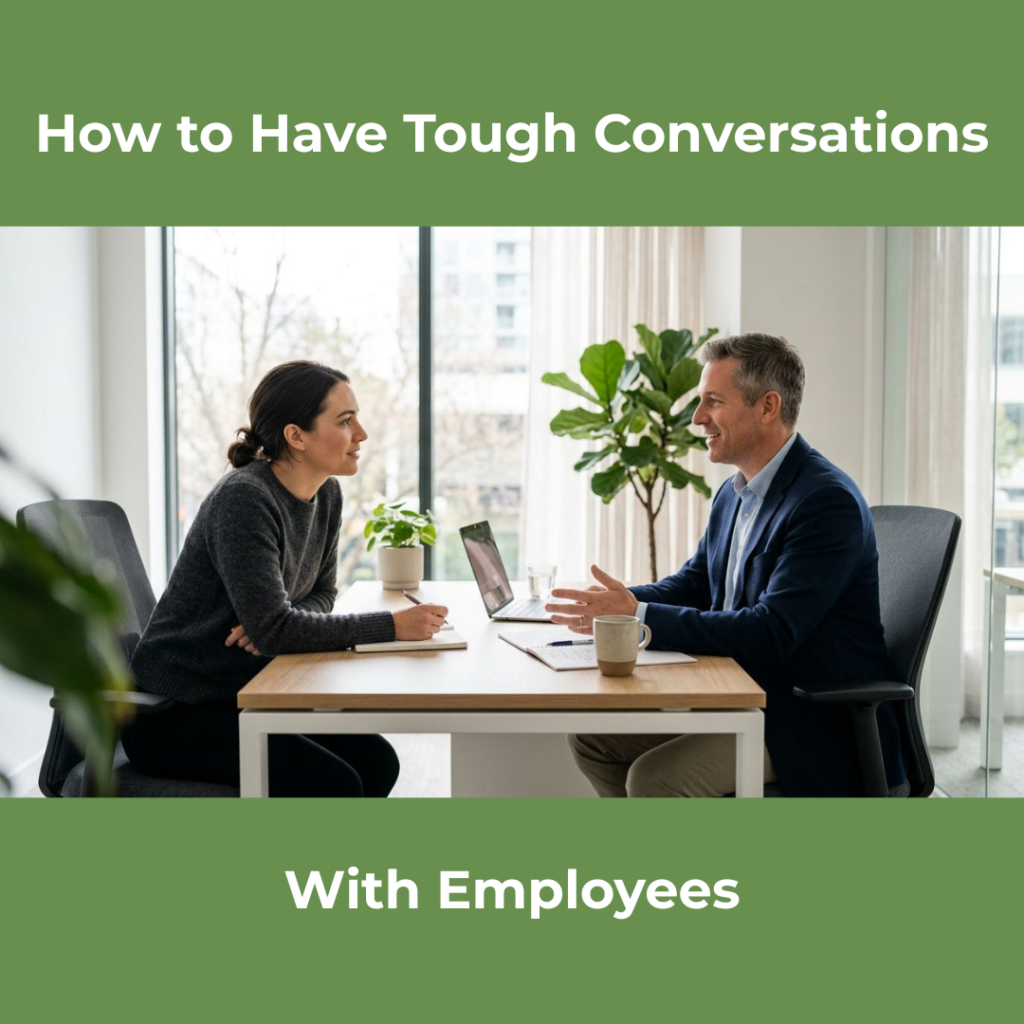
Most managers don't avoid difficult conversations because they don't care.
They avoid them because the stakes feel personal.
A team member is missing deadlines. Collaboration has changed. Performance is slipping. The manager knows a conversation needs to happen—but worries about being too soft, too blunt, or making things worse.
That tension is normal.
Learning how to have tough conversations with employees isn't about memorizing a script. It's about balancing accountability, clarity, and employee wellbeing without becoming vague or reactive.
Why Tough Conversations Matter
Avoidance feels easier in the short term.
But delayed feedback creates bigger problems:
- Performance standards drift
- Team frustration builds
- Documentation weakens
- Trust erodes
Strong managers address issues early—before frustration replaces clarity.
Practical rule:
If you're replaying the conversation in your head repeatedly, the employee probably needs clearer feedback.
Start With Preparation, Not Emotion
Most failed conversations don't fail because the manager lacked courage.
They fail because the manager walked in with conclusions instead of evidence.
Use a simple structure:
| Step | Focus |
| Situation | What happened? |
| Behavior | What specifically occurred? |
| Impact | What effect did it have? |
Example:
- Weak: “You've been disengaged lately.”
- Stronger: “In the last two project reviews, you came unprepared and key decisions were delayed.”
Specificity lowers defensiveness.
Prepare for More Than the Facts
Employees don't just react to the issue itself.
They also react to:
- How the feedback feels
- What it means about their identity or value
A missed deadline discussion may sound to the employee like:
- “I'm failing”
- “My manager doesn't trust me”
- “My role is at risk”
Good preparation considers both the operational issue and the emotional reaction.
Use a Simple Conversation Structure
A strong conversation follows a clear flow:
- Explain the purpose
- Share observable examples
- Ask for the employee's perspective
- Clarify the expectation gap
- Agree on next steps
That pause after sharing the issue matters.
Listening doesn't weaken accountability. It improves diagnosis.
Use Clear, Direct Language
Avoid vague or emotional phrasing.
| Avoid | Use Instead |
| “Your attitude is a problem.” | “In recent meetings, colleagues were interrupted before finishing.” |
| “You need to care more.” | “There's a gap between expectations and current delivery.” |
| “Everyone is frustrated.” | “I want to focus on the specific behaviors I've observed.” |
The goal is clarity—not pressure.

Don't Diagnose Burnout or Personal Issues
Managers should not speculate about someone's mental state or personal life.
Instead:
- Describe what you've observed
- Invite relevant context if appropriate
- Keep expectations clear
Example:
“I've noticed changes in responsiveness and follow-through. If there are work-related factors affecting capacity, I'd like to understand them.”
That creates room for support without crossing boundaries.
How to Handle Defensiveness
Emotion doesn't mean the conversation failed.
It means the issue matters.
Useful responses:
- “I understand this feels frustrating.”
- “Let's stay with the specific issue.”
- “I'd like to hear your perspective.”
- “We still need to work through the concern.”
Avoid:
- Arguing every point
- Matching emotion with emotion
- Rushing to force agreement
Strong managers regulate the conversation instead of reacting to it.
Know When to Pause
Sometimes the discussion needs a reset.
Pause when:
- The employee is too distressed to engage
- The conversation becomes circular
- Emotions are escalating
- Additional facts are needed
If you pause:
- Set a follow-up meeting immediately
- Document what was discussed
- Clarify what happens next
Follow-Through Matters More Than the Meeting
The conversation itself is not the intervention.
The follow-through is.
After the meeting, document:
- The issue discussed
- Expected changes
- Timeline
- Support offered
- Review process
Good action plans are operational.
- Weak: “Improve communication”
- Stronger: “Send project updates by Tuesday noon and escalate risks within one business day.”
Use a Coaching Cycle
Behavior change rarely happens instantly.
A practical coaching rhythm includes:
- Immediate recap
- Early follow-up check-in
- Midpoint review
- Final evaluation
This helps managers reinforce progress before issues become formal again.

Pair Accountability With Real Support
Support should match the issue.
| Problem | Support |
| Skill gap | Training or coaching |
| Prioritization issue | Clearer workload and decision rights |
| Capacity strain | Workload review and wellbeing support |
A fair process says:
- Here's the standard
- Here's the support
- Here's how progress will be measured
Build a Culture Where Feedback Is Normal
Organizations don't build strong cultures through slogans.
They build them through:
- Early feedback
- Consistent management
- Clear expectations
- Fair follow-through
When managers handle difficult conversations well:
- Employees know where they stand
- Problems get addressed earlier
- Teams carry less hidden tension
- HR sees more consistent management practices
Final Takeaway
Tough conversations should never feel casual.
But they also shouldn't feel unpredictable or punitive.
The best managers:
- Prepare carefully
- Speak clearly
- Stay calm under emotion
- Follow through consistently
That protects both performance and trust.
Excel Wellbeing Solutions helps organizations strengthen manager capability and create healthier workplace cultures through practical wellbeing and leadership support programs.
For leadership teams, the goal is simple: build environments where accountability and employee support can exist together.