
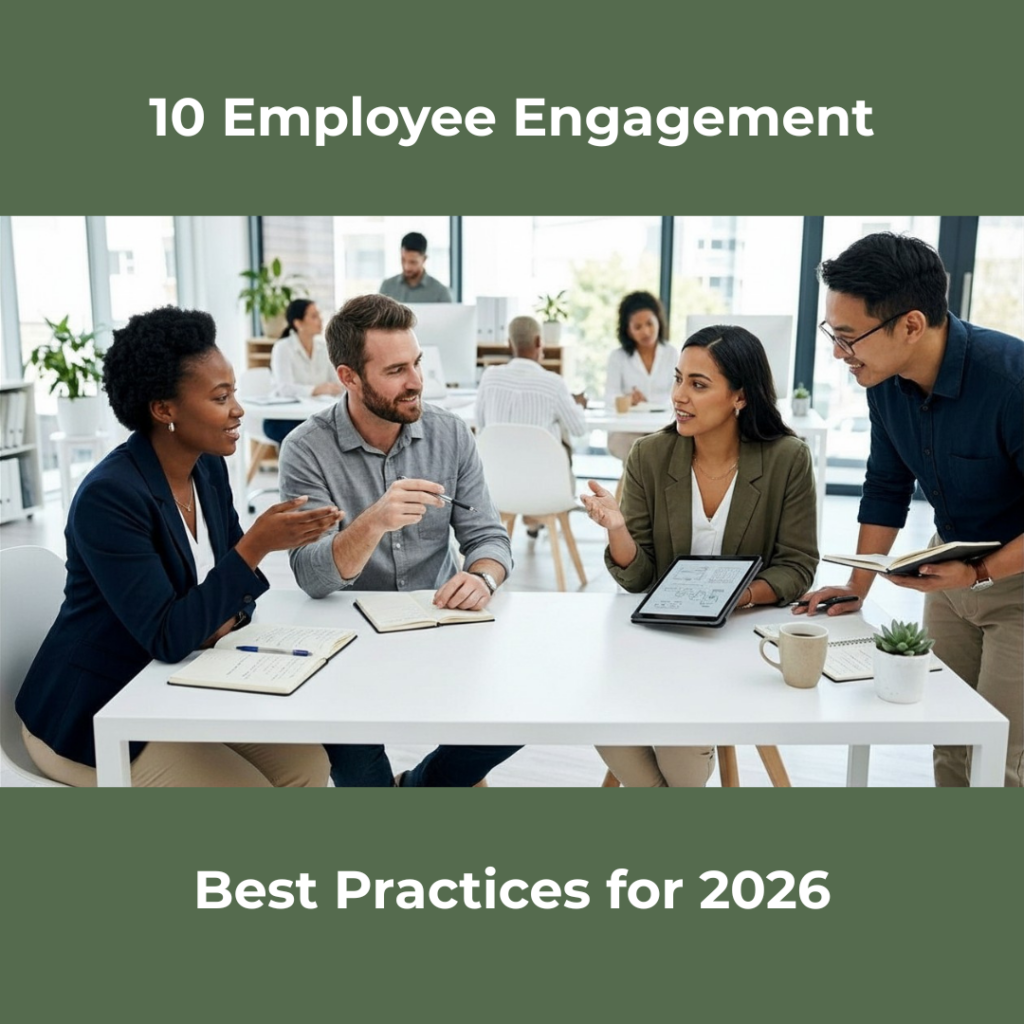
Employee engagement is no longer a “culture” initiative.
It's an operating priority.
Organizations with strong engagement see better retention, lower absence, and more consistent team performance. But most companies don't fail due to lack of intent—they fail due to fragmentation.
Employees experience one employer.
If wellbeing, communication, development, and management don't connect, engagement won't hold.
The practices below focus on what actually changes day-to-day experience—not just what looks good on paper.
1. Integrated Wellbeing Programs
Scattered wellbeing perks rarely move engagement.
A connected system—combining movement, recovery, support, and daily habits—works better because it fits how employees actually experience work.
Focus on:
- Easy entry points (short sessions, simple guidance)
- Multiple formats (onsite, virtual, hybrid)
- Manager reinforcement
- Consistent visibility
Rule: Start small. Three usable offerings outperform ten ignored ones.
2. Transparent Communication
Engagement drops when employees don't understand decisions.
Strong communication is less about frequency and more about clarity.
Employees want to know:
- What's changing
- Why decisions were made
- What it means for their work
- What's still uncertain
Execution matters:
- One source of truth
- Manager-led follow-up
- Clear timelines and updates
3. Career Growth and Development
Engagement increases when employees can see a future.
That doesn't mean constant promotion. It means visible growth options.
Effective systems include:
- Clear skill expectations
- Internal mobility opportunities
- Regular development conversations
- Manager coaching capability
Growth should feel real—not theoretical.

4. Mental Wellbeing and Psychological Safety
Support only works if employees use it.
That requires:
- Easy access to resources
- Manager guidance
- Realistic workload expectations
- Clear boundaries
Psychological safety is the foundation. Without it, engagement stays shallow.
5. Recognition That Feels Real
Recognition fails when it's generic or delayed.
It works when it is:
- Specific
- Timely
- Tied to meaningful work
Managers—not platforms—drive impact.
If recognition could apply to anyone, it won't matter to anyone.
6. Flexible Work With Clear Rules
Flexibility improves engagement when expectations are clear.
Employees need:
- Defined availability windows
- Outcome-based evaluation
- Consistent team norms
- Protected boundaries
Flexibility without structure creates confusion—not engagement.

7. Inclusive Culture and Fair Access
Employees judge culture by what actually happens—not what's said.
Focus on:
- Fair access to opportunities
- Consistent manager behavior
- Transparent decision-making
- Segmented measurement
Inclusion becomes credible when it shows up in daily work.
8. Strong Onboarding Experience
Engagement starts early.
Effective onboarding:
- Reduces uncertainty
- Builds relationships
- Drives early contribution
Focus on:
- Clear role expectations
- Manager check-ins
- Cross-team connections
- Early feedback loops
Orientation gives information. Onboarding builds confidence.
9. Purpose and Values in Practice
Purpose only works when it shows up in decisions.
Employees notice:
- What gets rewarded
- What gets tolerated
- How leaders behave under pressure
Make values practical:
- Tie them to hiring and promotion
- Use them in decision-making
- Reinforce them through recognition
10. Continuous Feedback and Coaching
Annual reviews are too slow.
Engagement improves when feedback is:
- Frequent
- Practical
- Two-way
Strong systems include:
- Regular one-to-ones
- Manager coaching skills
- Clear follow-through
Short conversations outperform annual evaluations.
From Practices to Strategy
The biggest mistake is trying to do everything at once.
A better approach:
- Fix one structural issue
- Solve one visible employee pain point
- Build from there
Engagement improves when employees can see change—not just hear about it.

Building a Practical Roadmap
Start with what your data shows:
- Survey results
- Exit patterns
- Manager feedback
- Operational metrics
Then:
- Define a small set of priorities
- Train managers to support them
- Assign clear ownership
- Measure consistently
- Share progress
Manager capability is often the highest-leverage starting point.
Final Takeaway
Employee engagement isn't built through programs alone.
It's built through:
- Manager behavior
- Work design
- Clear communication
- Usable support
When those elements align, engagement becomes part of how the organization operates—not something employees opt into.
Excel Wellbeing Solutions helps organizations integrate wellbeing into broader engagement strategies—supporting performance, retention, and workforce stability.
For HR leaders, the goal is simple: build systems employees can use—and managers can support consistently.